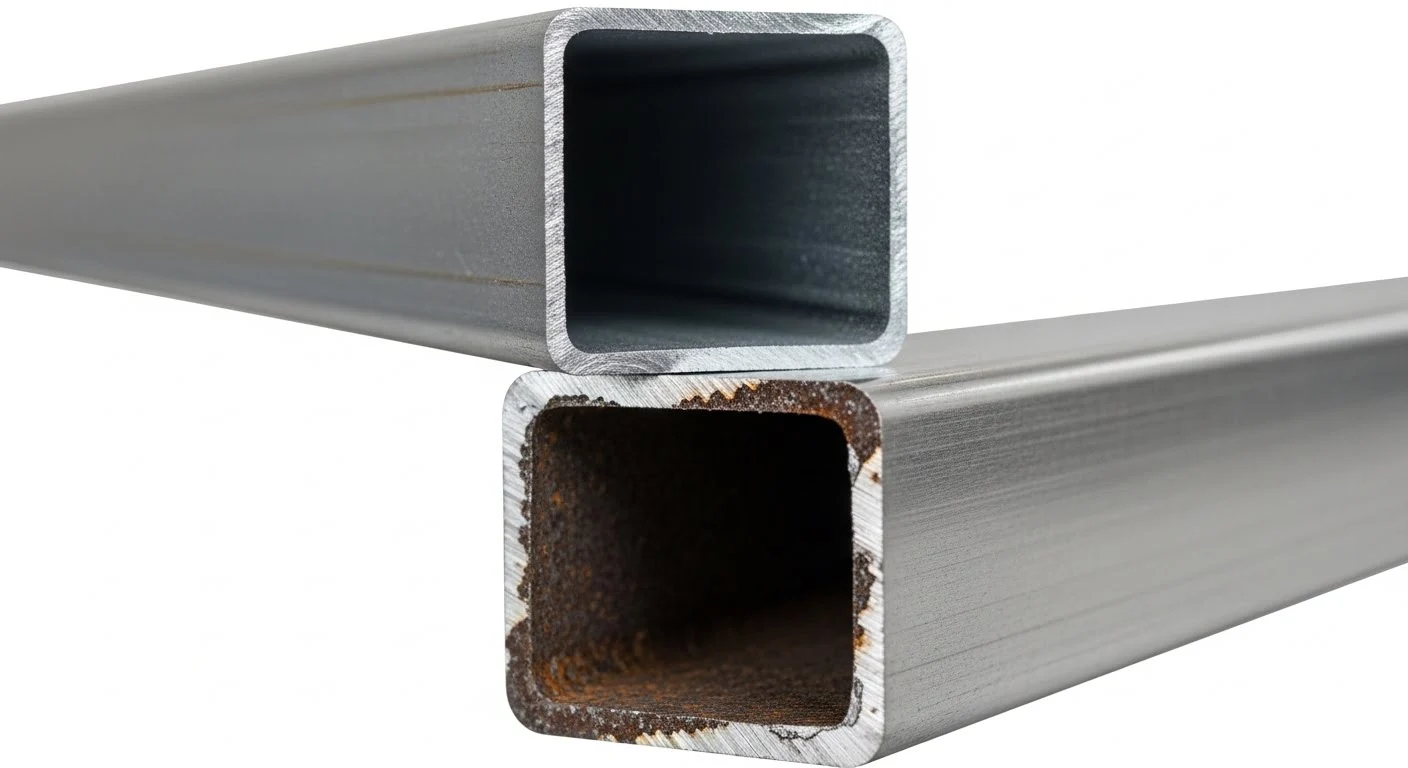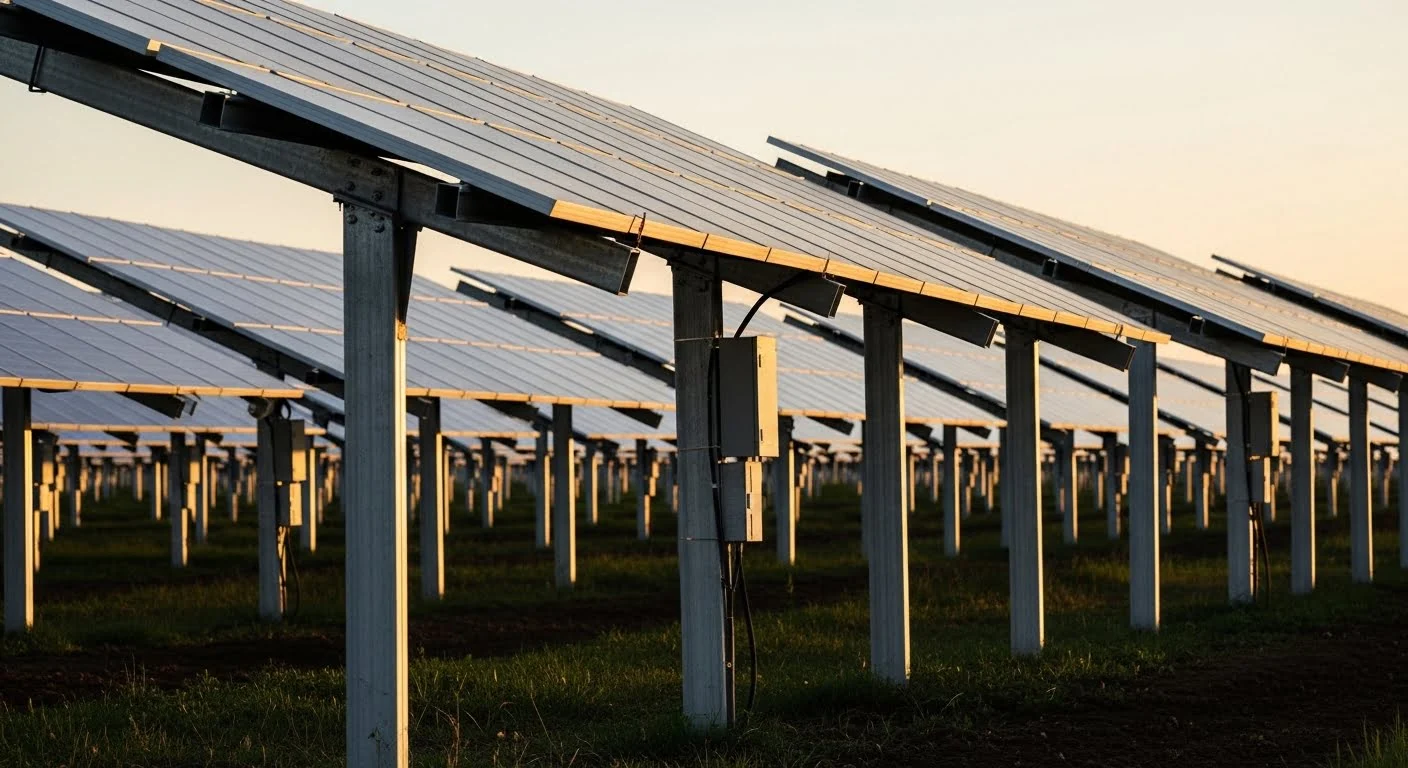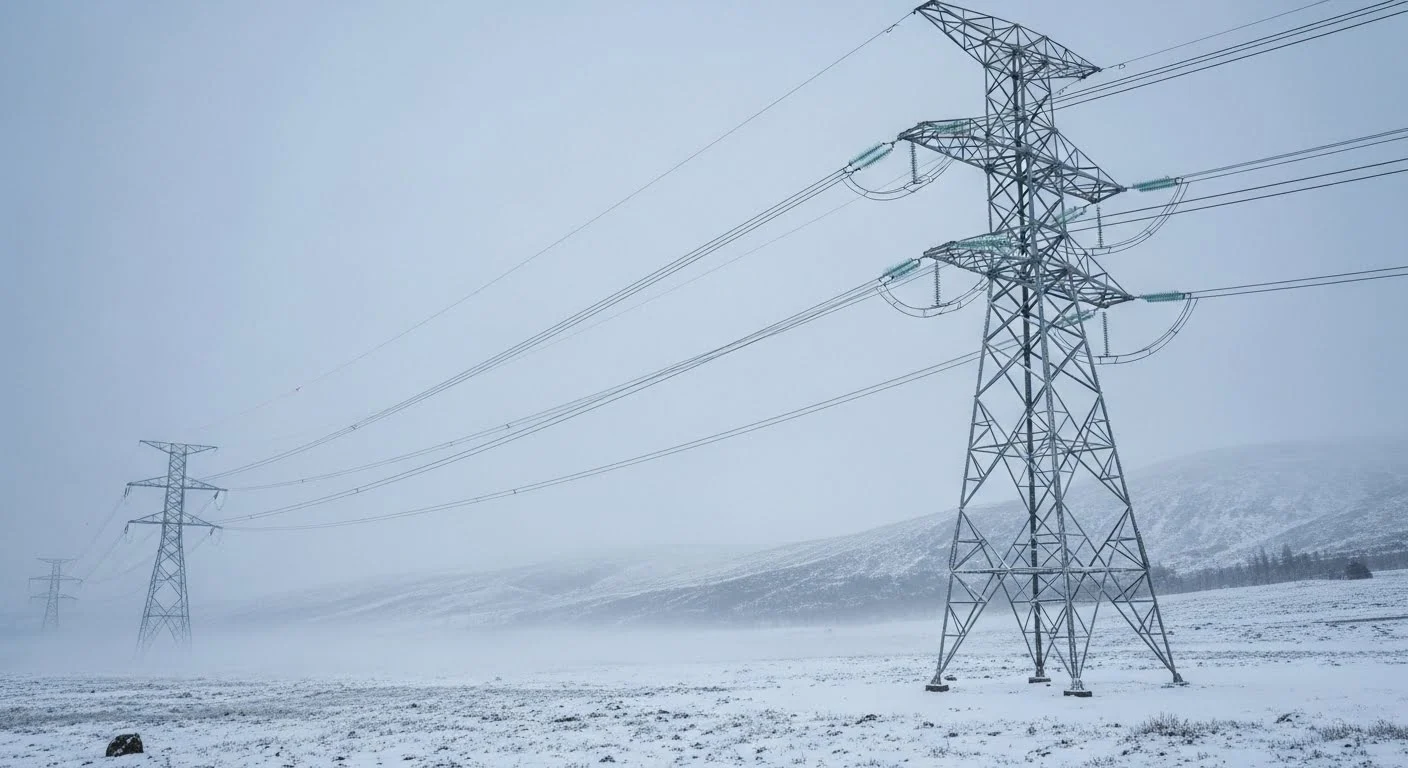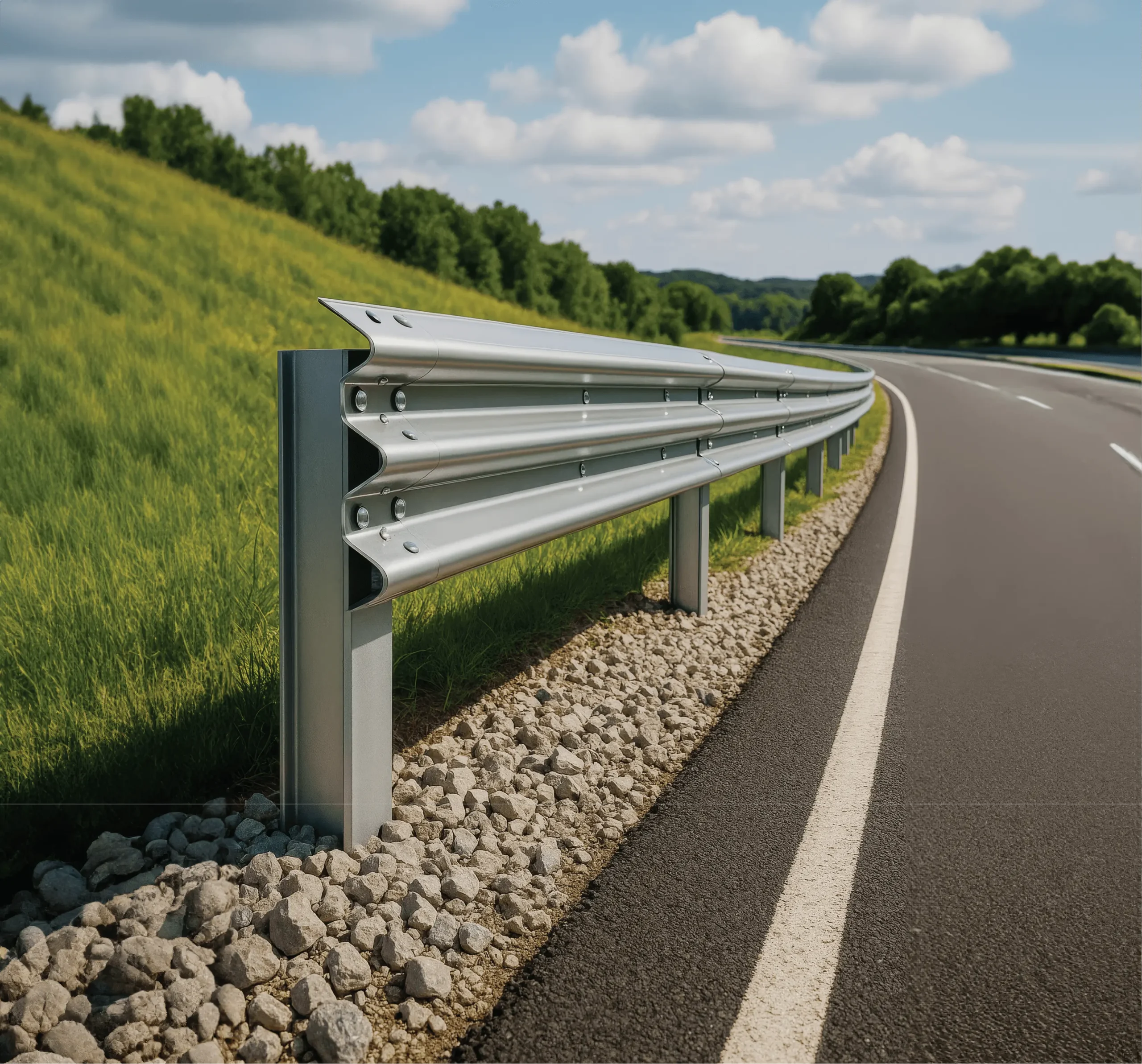


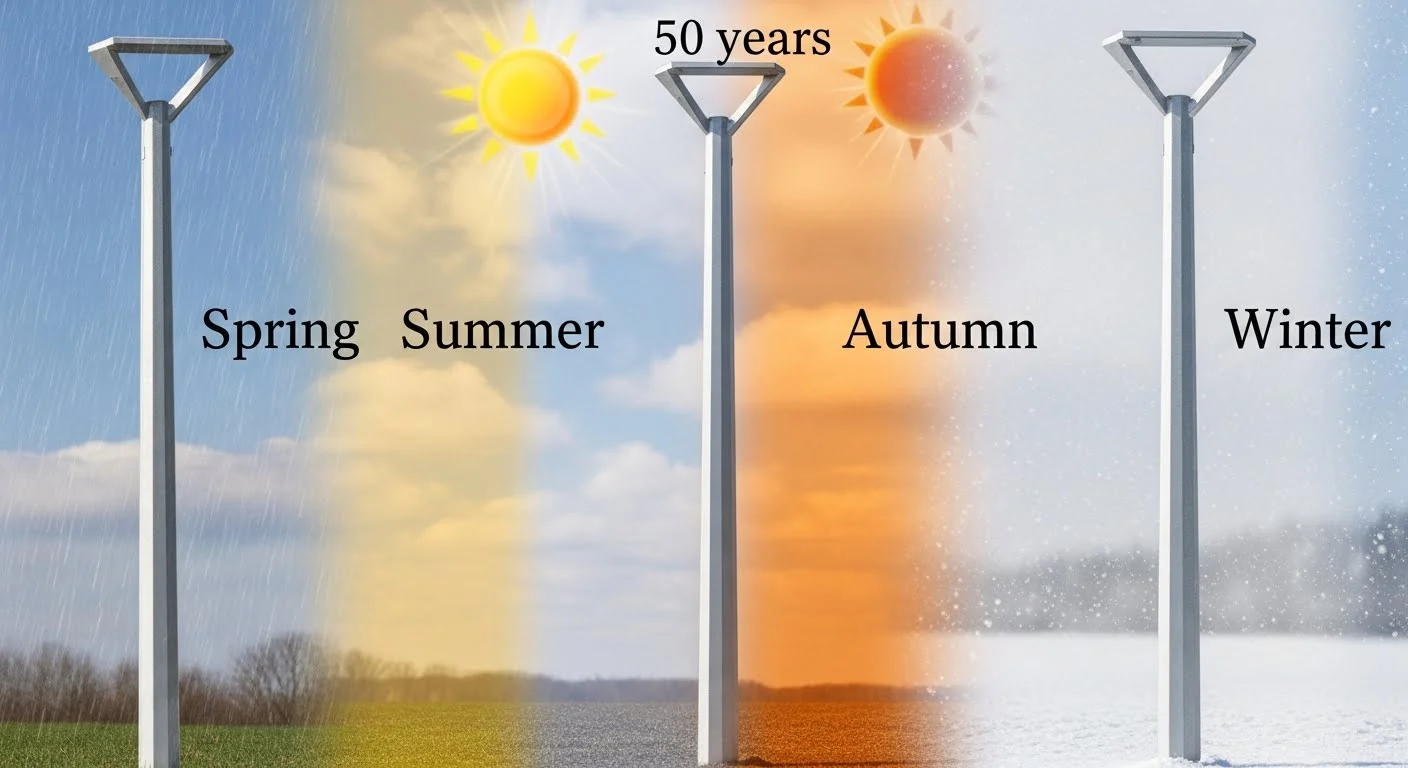
Every 90 seconds, one ton of steel produced worldwide becomes unusable due to corrosion (rusting). </From power transmission lines to lighting poles, from stadium roofs to guardrail systems, the steel that forms the backbone of our infrastructure is vulnerable to oxidation, nature’s most stubborn process.
The most critical question for an investor or project engineer is: “How many years will this pole I erected today stand without maintenance?”
The answer lies in the right method of protection. Hot Dip Galvanizinghas been the most reliable way to protect steel for over 150 years. But not all galvanizing is the same. Coating thickness, dipping technology and environmental conditions can reduce the life of a pole to 10 years or increase it to 100 years.
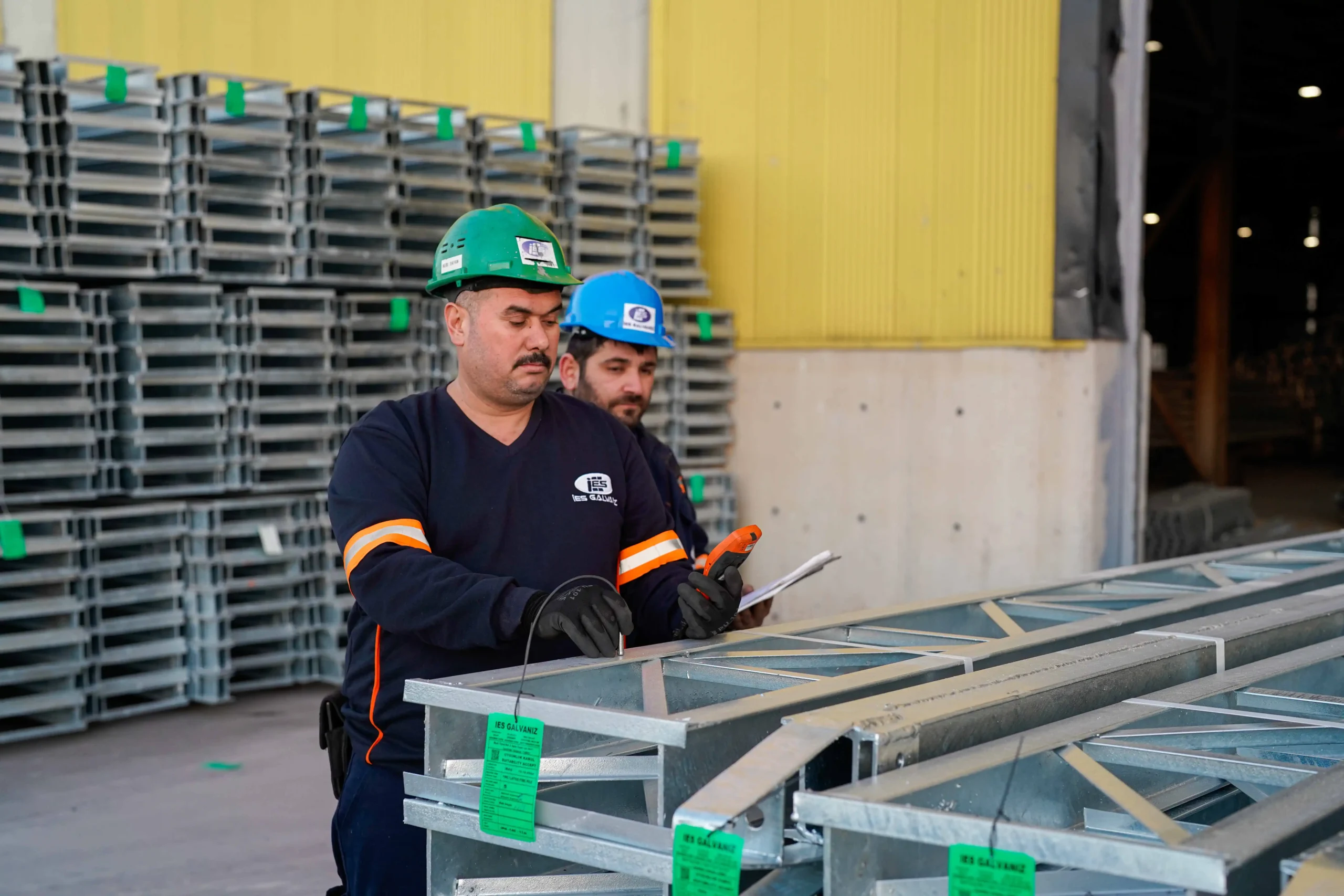
As İES Galvaniz, in our integrated facilities in Osmaniye, with our 14 meter galvanizing pool capacity and TS EN ISO 1461 standards, we extend the life of steel over half a century. In this guide, we will examine galvanized pole life calculation, technical details and the difference of IES quality with all transparency.
What is Hot Dip Galvanizing and How does it Protect (Scientific Overview)
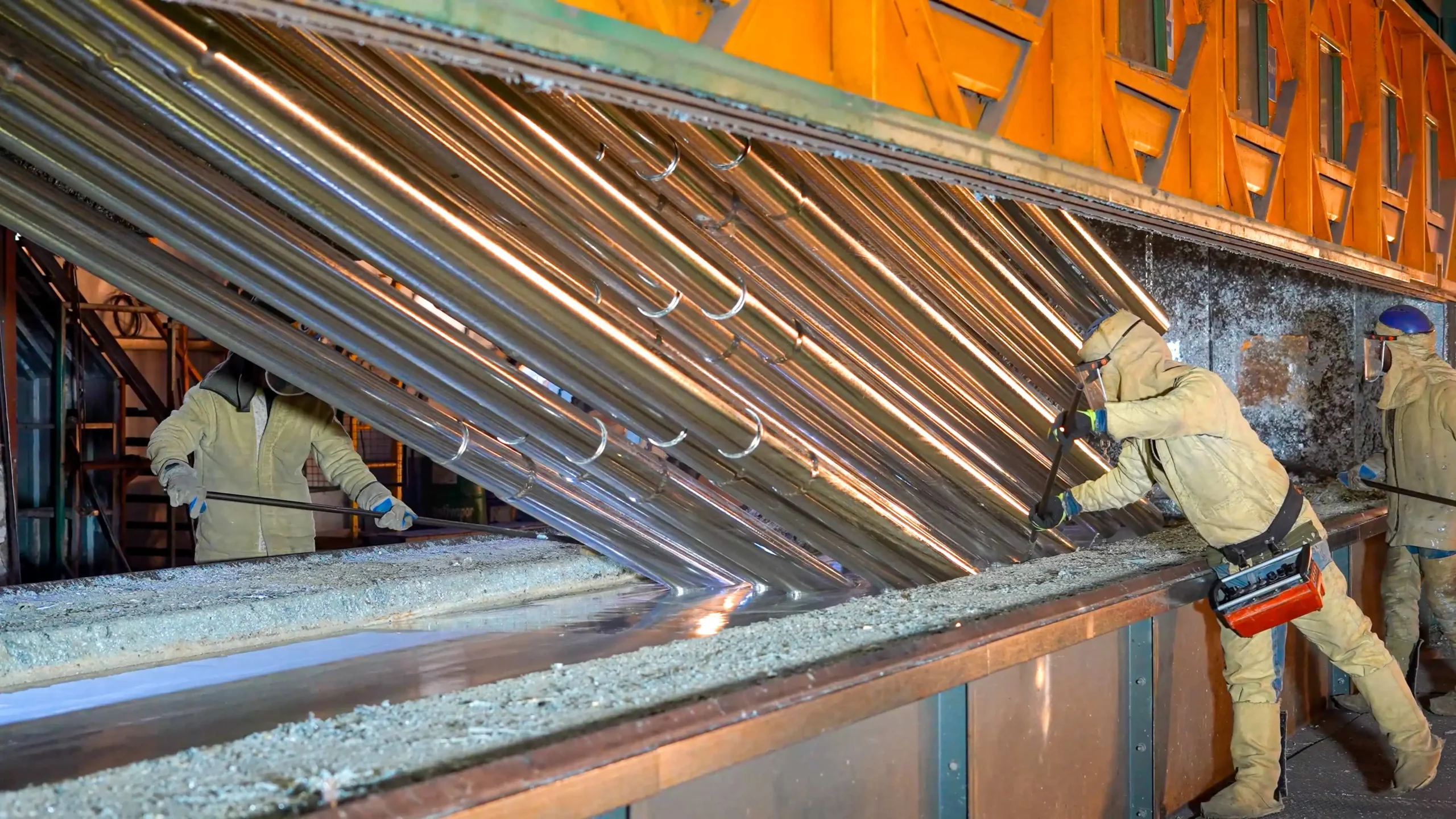
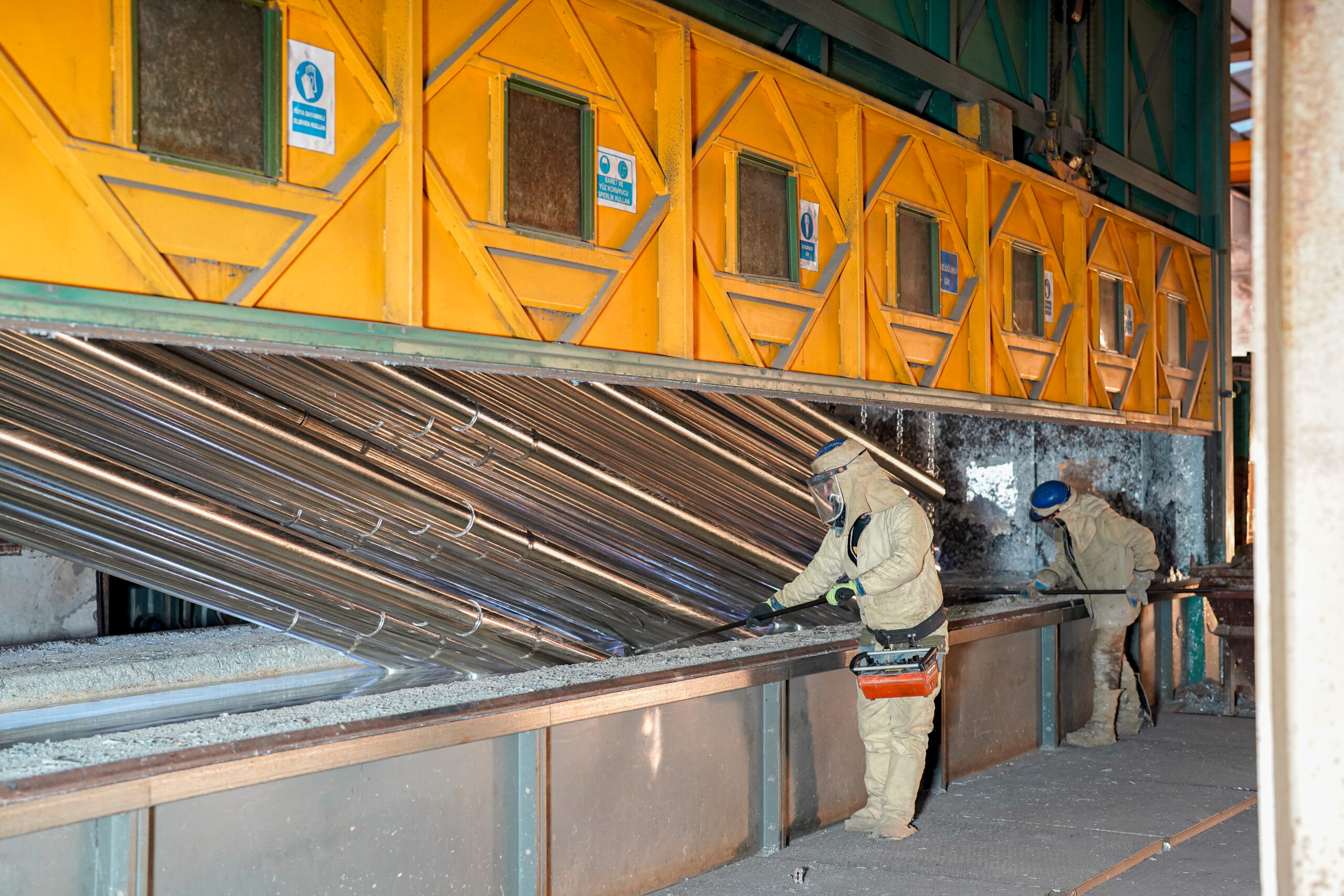
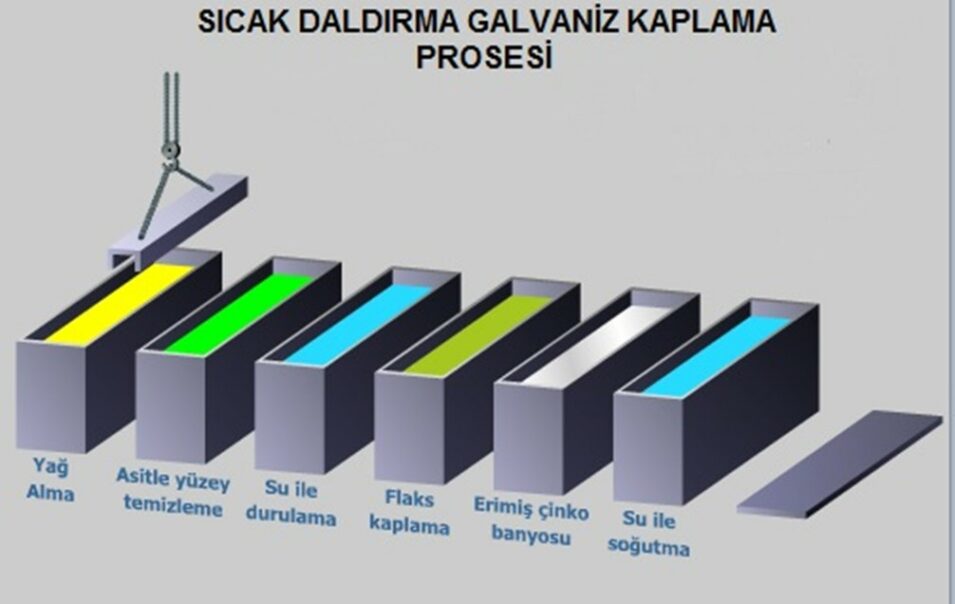
Hot-dip galvanizingis not simply applying paint to the surface of steel; it is a metallurgical reaction between steel and zinc. Steel immersed in a molten zinc bath at 450°C forms iron-zinc alloy layers on its surface.
This protection mechanism is based on two basic principles:
A. Barrier Protection
The resulting galvanized coatingphysically separates the steel from the atmosphere (moisture and oxygen). Steel cannot breathe, so it cannot rust.
B. Cathodic Protection (Sacrificial Anode Principle)
This is the greatest miracle of galvanizing. Zinc is electrochemically more active than iron. Even if the coating is scratched or hit, the zinc sacrifices itself (sacrificial anode) to protect the underlying steel. When a painted pole is scratched, the rust walks underneath; galvanized poles on the other hand, rust does not walk, zinc heals the wound.
Metallurgical Bonding and Alloy Layers
Galvanized coating consists of four different phases (Eta, Zeta, Delta, Gamma) from the outside to the inside.
An Interesting Fact: Delta and Zeta alloy layers are harder than the base metal, steel. This makes galvanized polesmuch more resistant to impacts during transport and installation than paint.
Factors Determining the Life of Galvanized Poles
There is no single answer to the question “How many years will a galvanized pole last?“. Lifetime depends on two main variables: Coating Thickness and Environmental Conditions.
Atmospheric Corrosion Categories (TS EN ISO 14713-1)
Standards classify atmospheric conditions on Earth according to the severity of corrosion
- C1 and C2 (Rural / Clean Air): Very low corrosion rate. Life expectancy 100+ Years.
- C3 (Urban / Medium Industrial):Environments with exhaust gases and humidity. Life expectancy: 40-60 Years.
- C4 (Industrial and Coastal): Areas affected by factory chimneys or sea salt. Life expectancy: 20-40 years.
- C5 (Heavy Industrial and High Salt): Seafront ports or acidic factories. Life expectancy: 10-20 Years.
Coating Thickness (TS EN ISO 1461)
Life is directly proportional to the thickness of the zinc. The greater the thickness, the longer the lifespan.
According to the standards, steels with a thickness of 6mm and above (A type poles, polygon poles), the minimum coating thickness should be 85 microns.
- IES Galvanizing Standard:We usually achieve an average coating thickness of 100-120 microns above the standards, increasing the life on paper by 20-30% in the field.
“Time to First Care” Analysis
In engineering, life is defined not as the moment the pole collapses, but as the moment when “first maintenancemust be performed.”
The following table shows the estimated life of a pole with a standard 85 micron coating in different environments:
| Atmosphere Class | Annual Zinc Loss (µm) | Estimated Lifespan (Years) |
| C1 (Rural) | < 0.1 | 100+ |
| C2 (Temperate) | 0.1 – 0.7 | 100+ |
| C3 (City) | 0.7 – 2.1 | 40 – 100 |
| C4 (Industrial/Coastal) | 2.1 – 4.2 | 20 – 40 |
| C5 (Heavy) | 4.2 – 8.4 | 10 – 20 |
Paint and Galvanizing Comparison: Why Galvanized?
The question “Why don’t we use paint?”is often asked in the market. Here are the differences that make galvanizing unbeatable:
- Adhesion Strength: Paint adheres mechanically to the surface of the steel. It swells over time. Hot-dip galvanized, on the other hand, forms a chemical bond with the steel, integrating it.
- Hidden Corrosion:When a painted post is scratched, rust seeps under the paint. Galvanized coating does not have this risk.
- Weather Resistance:UV rays crack paint. Galvanized is immune to sun and rain.
- Maintenance Cost:A painted pole needs to be repainted every 5-7 years. Galvanized is a maintenance-free (Fit and Forget) technology.
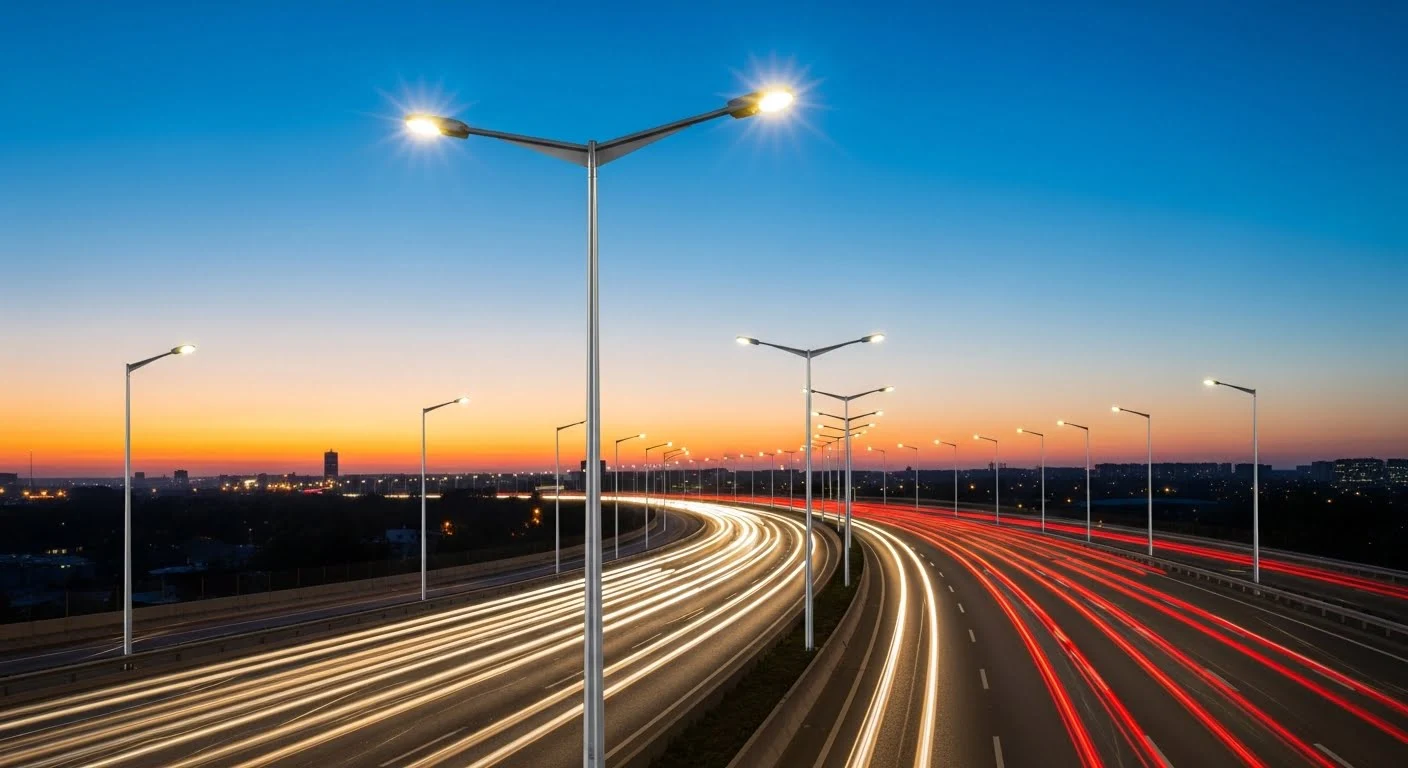
how long does a galvanized pole last?
IES Galvanized Difference: 14 Meters Single Immersion Technology
The most critical but least known factor determining the lifespan of a pole is the dipping method.
Most facilities in the industry have pools of 6-7 meters. To cover a 12-meter polygon lighting pole, they make double dip (Double Dip).
Why Double Dipping is Risky
- Joint Vulnerability: A rough and dark colored mark is formed in the middle of the pole. This area is the starting point of corrosion.
- Corrosion Risk: Excessively thick coating is prone to flaking.
- Bending:The pole may bend due to thermal differences.
IES Galvanized Single Dip Advantage
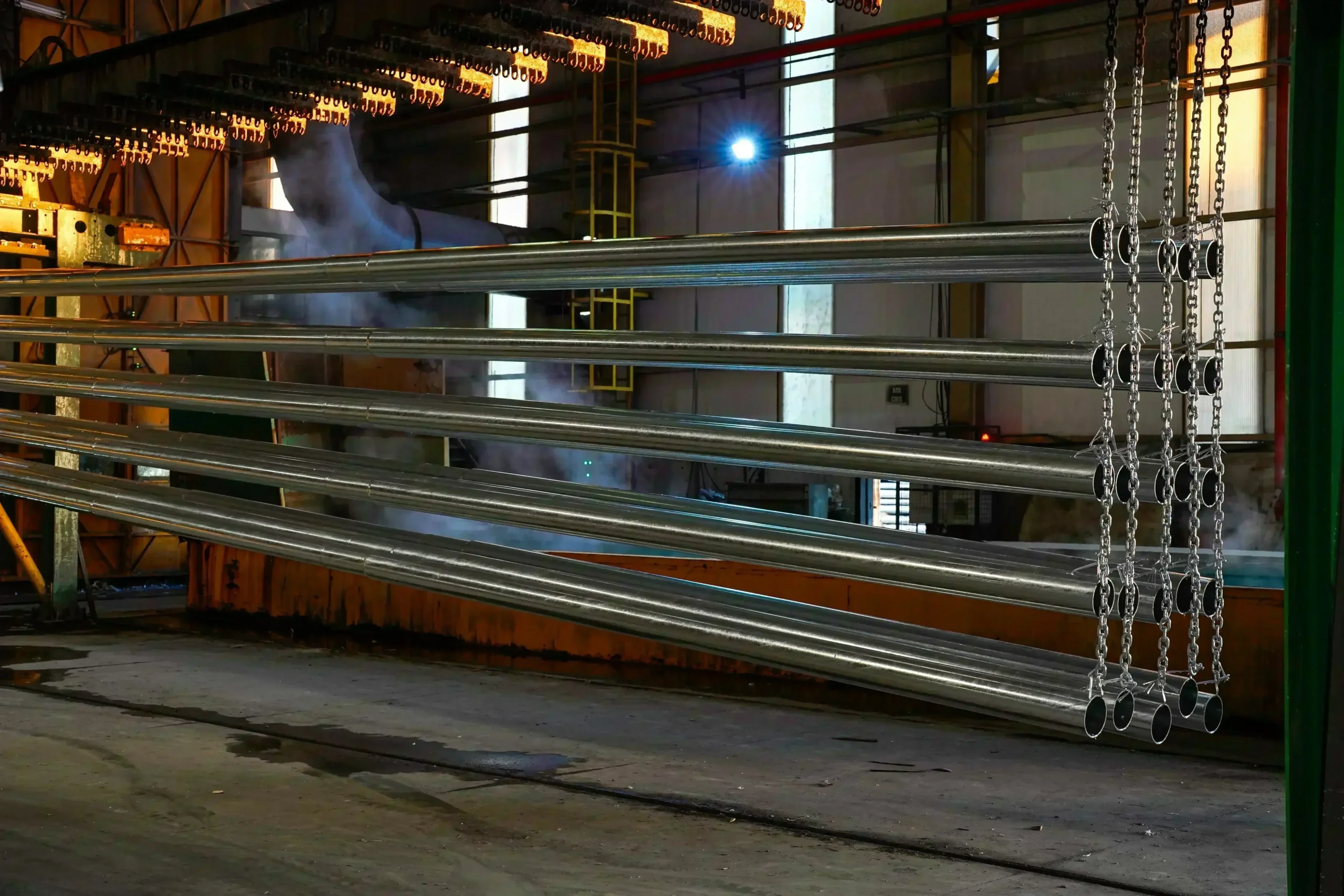
İES Galvaniz covers lighting polesor energy transmission poleswith its 14-meter-long galvanized boilerin one go.
- Result: A seamless, seamless, homogeneous coating from the base to the top of the pole. Since there are no weak points, the promised 50-year lifespan is guaranteed.
Subsoil Corrosion and Ground Contact
The weakest point of the poles is the “ground transition zone” where they come into contact with the soil, not the air. Soil moisture and acidity accelerate corrosion.
- Solution: As IES Galvaniz, we show extra sensitivity on the stubs to be buried in the ground. In accordance with the specifications, we recommend applying bituminous paint or additional insulation to the subsoil level.
Life Cycle Cost (LCC) Analysis
Galvanized pole prices are actually a 50-year “down payment.”
- Initial Investment:Galvanizing may initially appear costly compared to painting.
- Operating Cost (OPEX):Imagine never painting the poles for 50 years.
- Inflation Effect:When considering future labor and painting costs, galvanized steelis the most economical solution in terms of return on investment (ROI).
Galvanized Pole Maintenance and Inspection
Even though we say “maintenance free”, periodic checks can prolong life.
- Visual Inspection:“White Rust(Zinc Oxide)” (Zinc Oxide) on newly galvanized materials is usually cosmetic and passes over time.
- Field Repair: Points damaged during installation should be repaired with cold galvanizing sprays or zinc-rich paints in accordance with TS EN ISO 1461 standard.
Sustainability and Recycling
Galvanized steel is a material that earns points for green building certifications.
- 100% Recycling: A galvanized pole that has completed its life is melted down as scrap. Zinc and steel are separated and 100% recovered.
- Naturalness: Zinc is an element that already exists in nature. It does not emit toxic substances like paints.
Frequently Asked Questions (FAQ)
- Can galvanized poles be painted?
Yes. This is called “Duplex System”. For aesthetic color change or very aggressive environments, galvanized paint can be applied.
- How long is the life of galvanizing by the sea
A good galvanized coating of 85 microns and above will last 15-20 years without maintenance, even on the coastline.
- Can a rusty pole be galvanized again?
Yes. If the old pole is brought to our factory, it can be cleaned in acid pools and then hot-dip galvanizedmade again.
Quality is No Coincidence
The safety of a energy transmission lineor city lighting cannot be left to chance. Corrosion is a static risk, not just an aesthetic defect.
İES Galvaniz, TS EN ISO 1461 standards, 14 meter single dip technology and 120.000 tons of experience per year, IES Galvaniz offers 50 years of rustproof shield for your projects.
Don’t Take Risks in Your Projects, Get Guarantees.
Contact our expert engineers for your technical questions, galvanized quotation and polygon pole requests.