

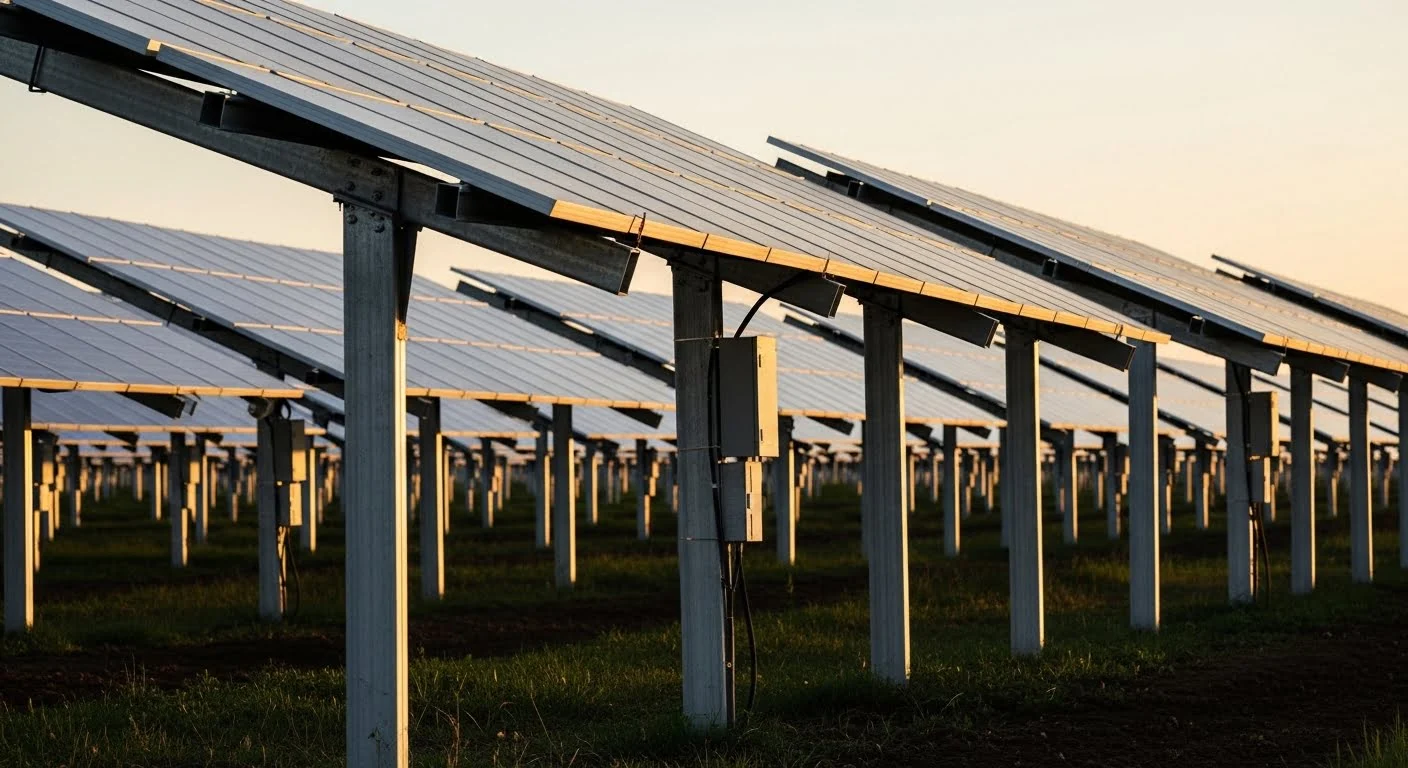
In solar energy investments, all attention is usually focused on the efficiency of the panels and the brand of the inverters. However, a Solar Power Plant (SPP) is not just about the panels that generate electricity. If the panels are the heart of the system, the solar structural system, that is, the construction, is the skeleton of the system, which keeps them standing against wind, snow and earthquakes for 25 years.
The most common mistake investors make is to underestimate the importance of the “skeleton”. While panel manufacturers guarantee 25 years of efficiency, if the metal system underneath succumbs to corrosion and decays in 10 years, it means that the investment is garbage.
In this guide, you will learn how to choose the right steel construction for land-type SPP projects, the importance of static calculations and the IES Galvanizprovided by hot-dip galvanizingwe will examine the impact of technology on return on investment (ROI) with technical data.
Why Solar Carrier System is Critical
Solar mounting systemsare not just a “stand” to carry the panels; they are the insurance for your investment.
Protector of Investment
Millions of dollars worth of panels are completely vulnerable to the harsh elements of nature. In a 120 km/h storm or heavy snowfall, the only force that keeps the panels from flying is the steel piles driven into the ground and the profiles that hold them in place.
Risk of Micro-cracks
An improperly designed construction or one that flexes excessively under wind load creates invisible “micro cracks” on the panels. These cracks grow over time, reducing the efficiency of the panel and leading to “hot-spot” (overheating) failures. In other words, a robust construction not only protects safety, but also energy efficiency.
Insurance Coverage
In the event of a natural disaster, the first thing that insurance companies look at for damage assessment is the construction projectand the quality of the installation. The use of substandard materials may cause you to lose your right to compensation.
The Battle of Materials: Galvanized Steel or Aluminum?
Especially in large-scale land-type SPP projects, the trend is in favor of galvanized steelfor technical and economic reasons.
Strength and Load Bearing Capacity
The modulus of elasticity of steel (about 200 GPa) is almost 3 times that of aluminum (about 70 GPa). This means that steel can carry much higher wind and snow loads with less flexing.
Differences in Thermal Expansion
Power plants are exposed to a temperature difference of 40-50 degrees between day and night. Aluminum expands 2 times more than steel in temperature changes. This continuous elongation-shortening movement can loosen bolted connections. Steel construction maintains the integrity of the system for 25 years with its thermal stability.
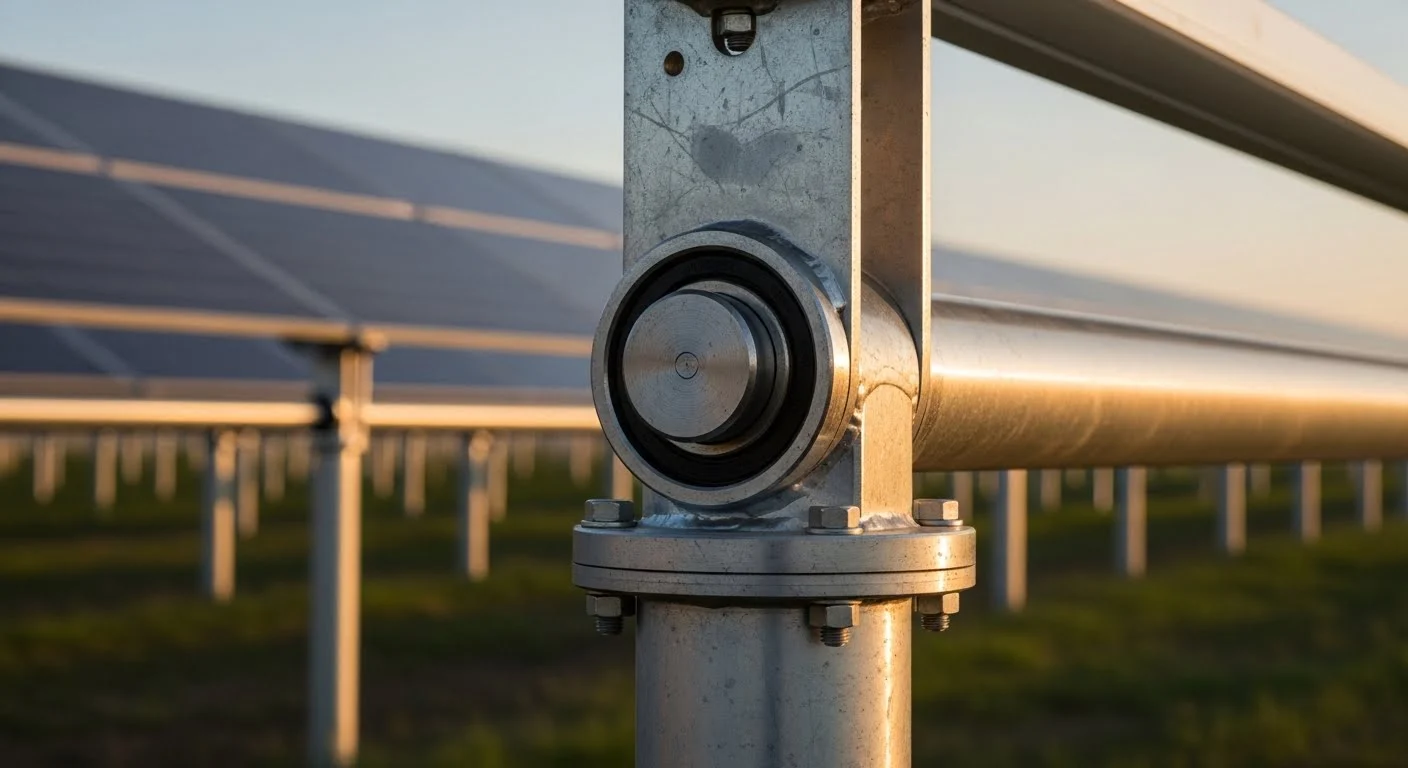
solar carrier system selection guide
Corrosion: The Silent Killer of SPP Plants
A SPP site can be a humid farmland, a salty coastline or an industrial zone. The common enemy of these environments is corrosion.
Atmospheric Corrosion Classes
The corrosion class (C3, C4, C5) of the region where the system will be installed must be analyzed. If a standard coating is used in a seaside project, the system will corrode in 5 years.
Hot Dip Galvanized vs. Pre Galvanized
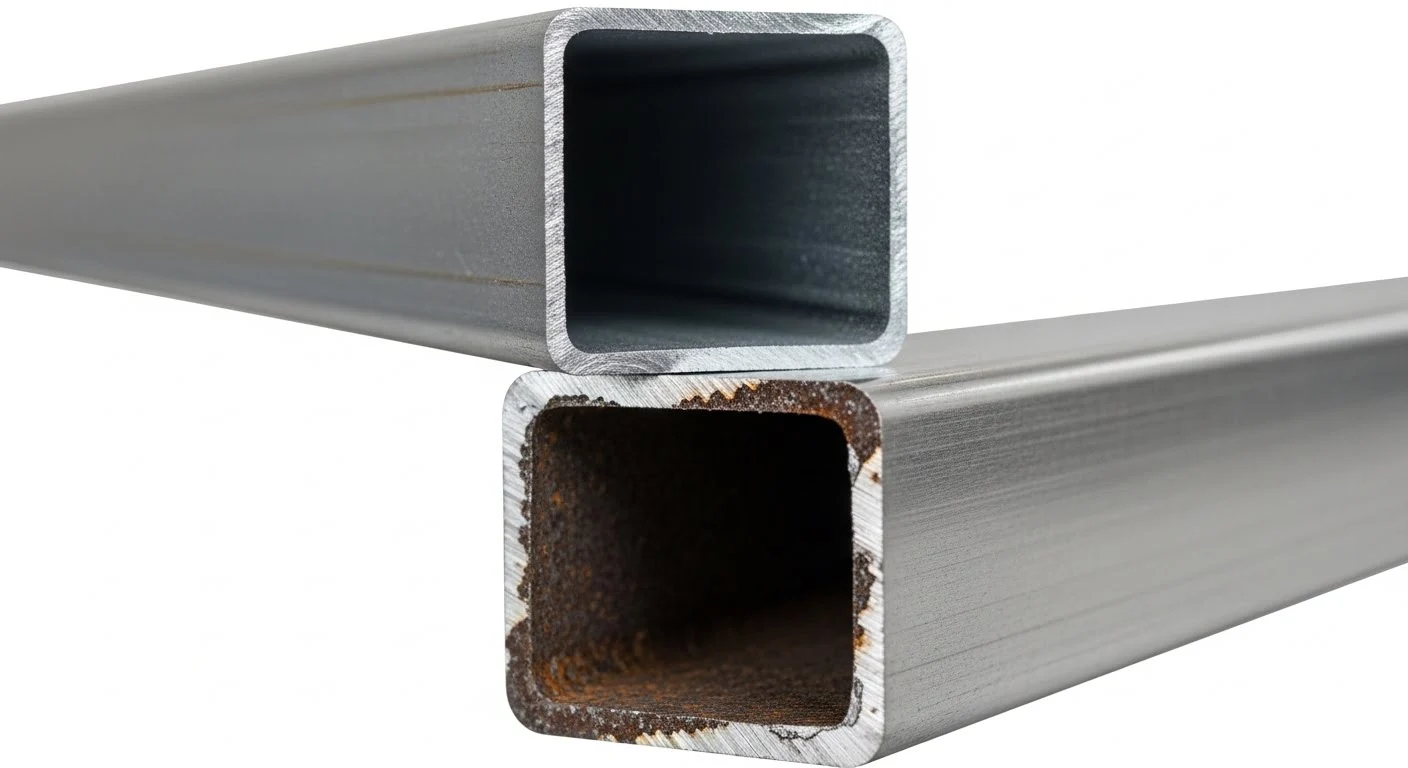
In order to reduce costs in the industry, “Pre-galvanized” sheets are sometimes used. These sheets are coated in rolls, then cut and perforated.
- Risk: There is no zinc coating on the cut edges and drilled holes; raw steel is exposed. Rust starts here.
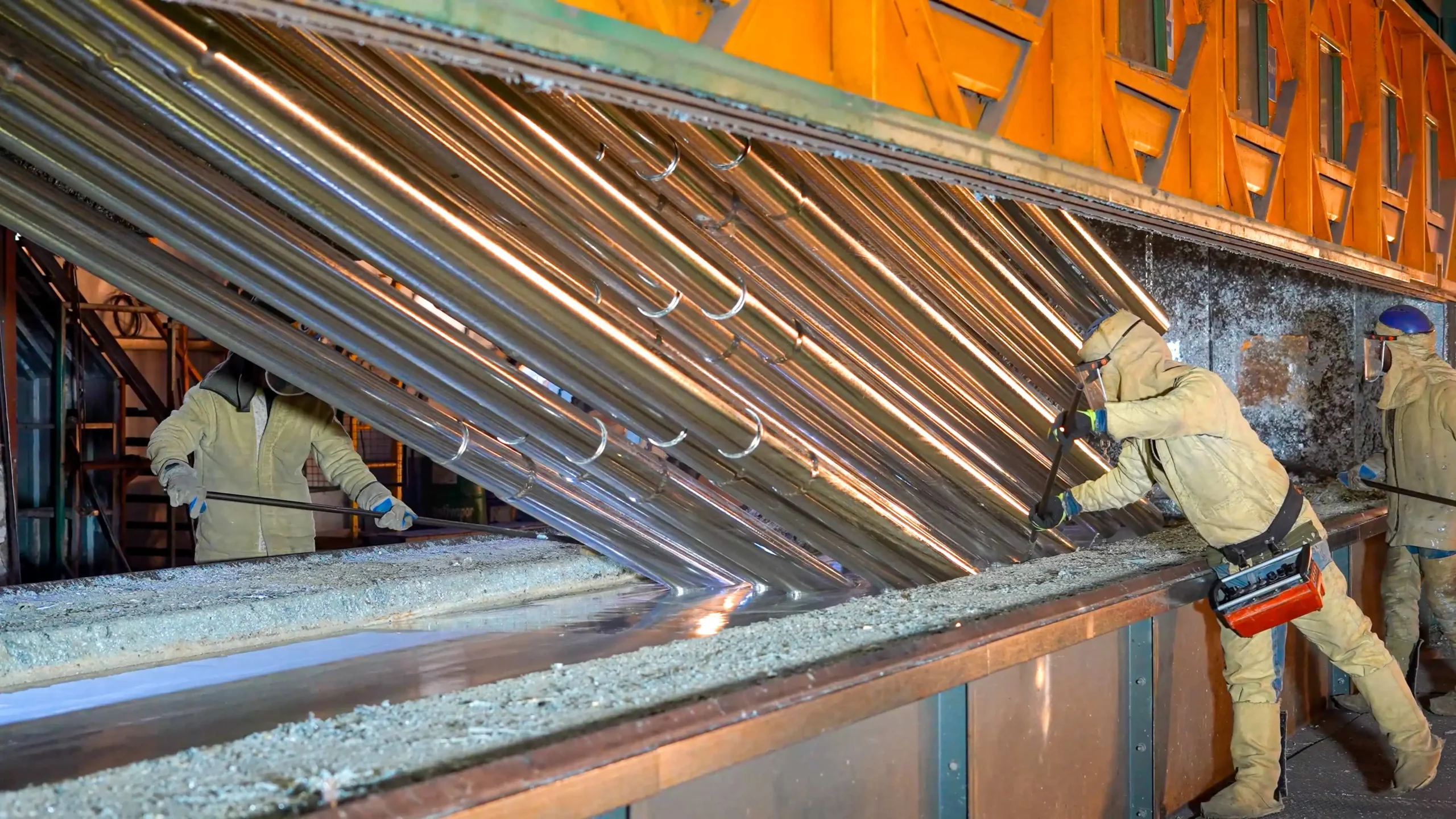
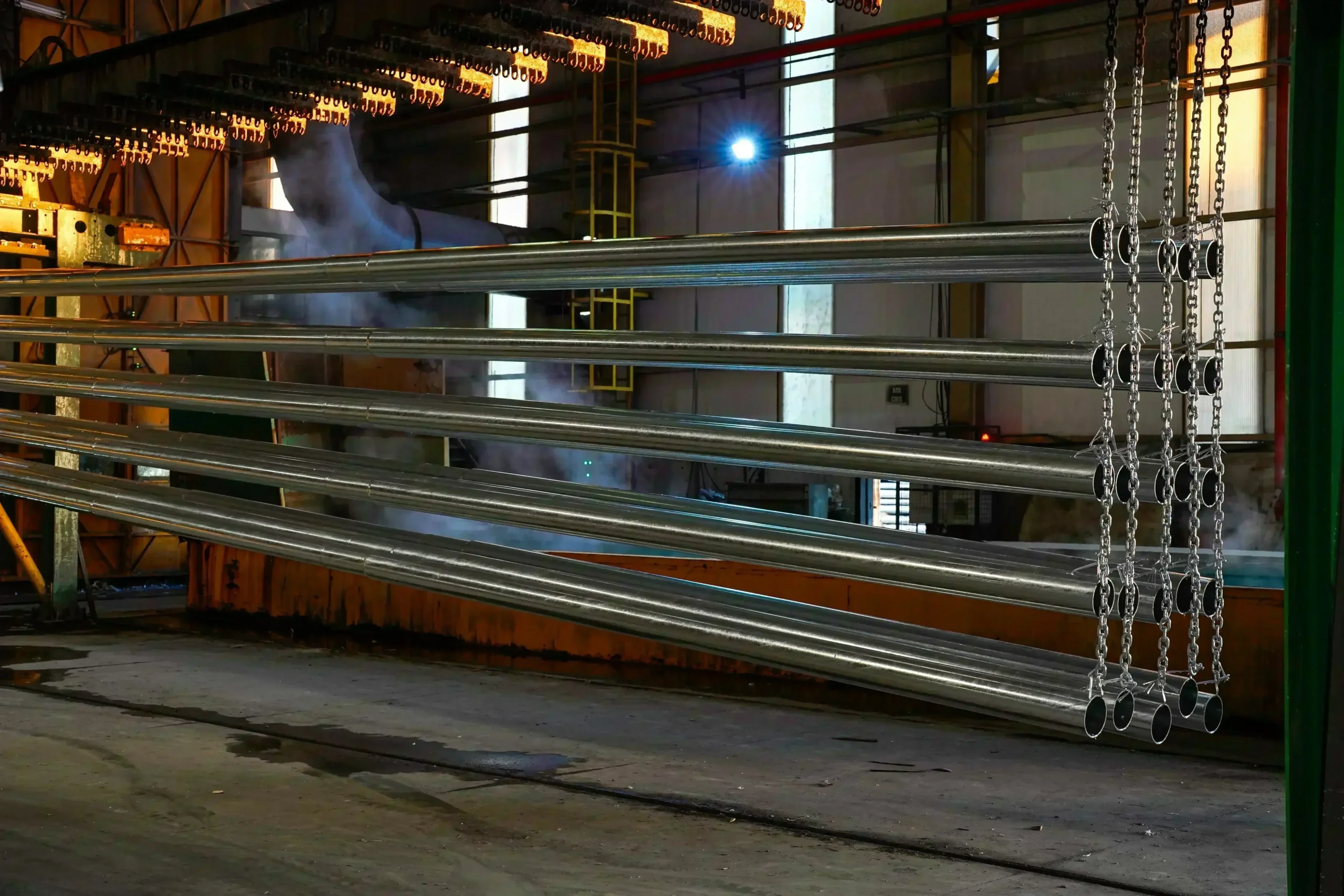
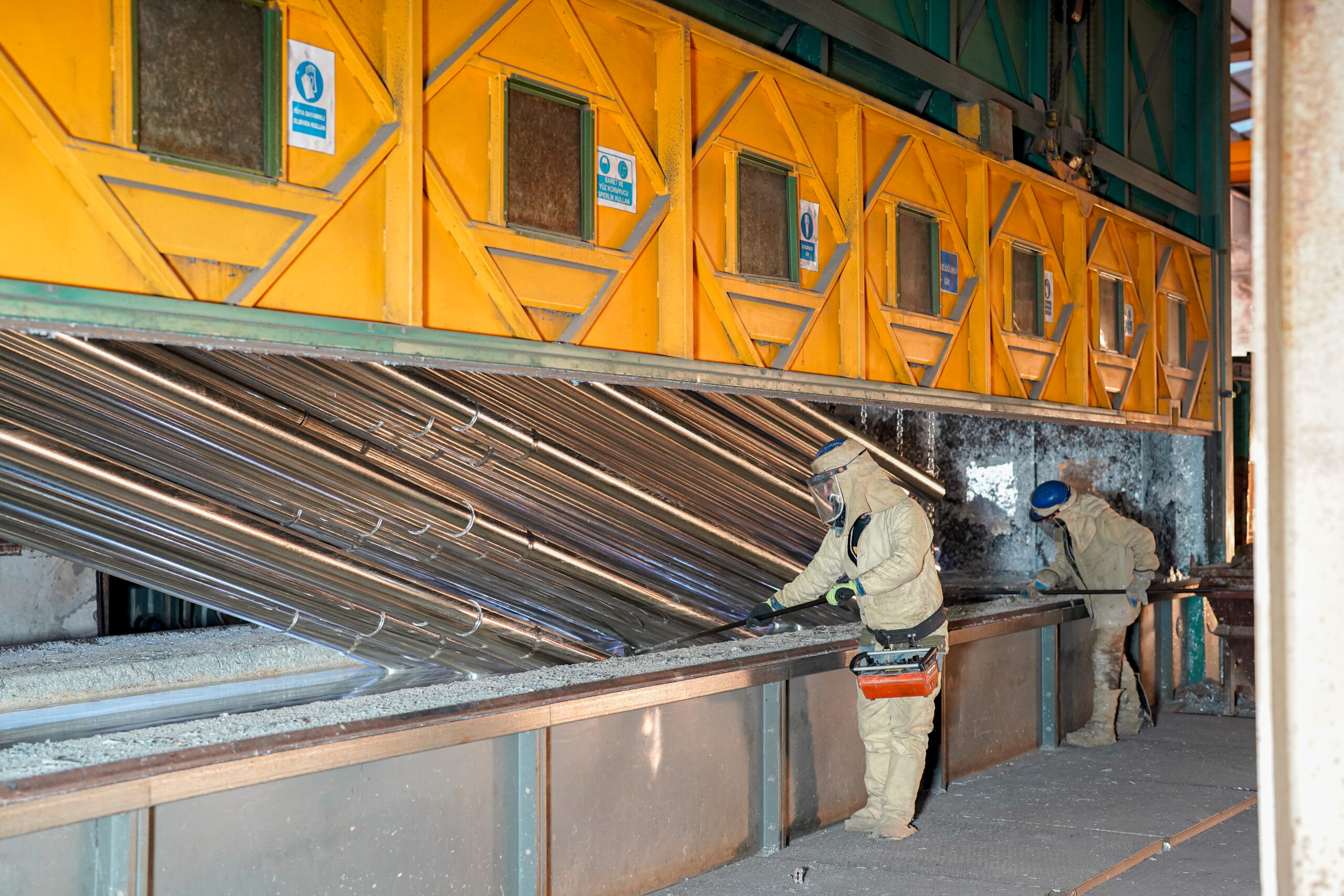
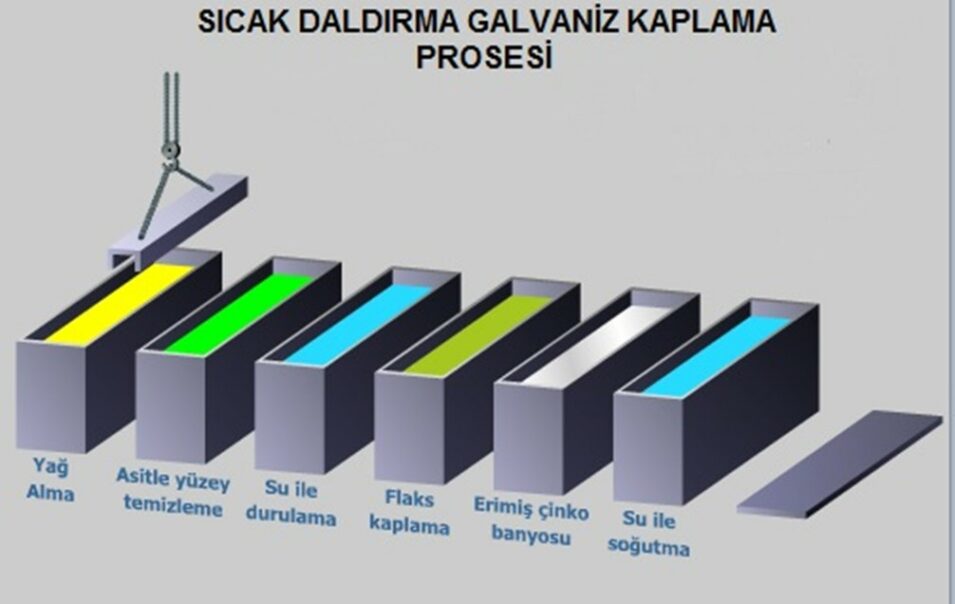
- Correct: IES Galvaniz applies hot-dip galvanizingIn the hot-dip galvanizing (SDG) process, after the part has been manufactured, cut and drilled it is thenentirely dipped in a pool of zinc. This ensures 100% protection, including cut ends and inside holes.
The IES Galvanizing Difference: Single Dipping and Production Technology
What makes IES Galvaniz different in solar systems is that it is not only a galvanizer, but also an integrated steel producer.
Welding and Boltless Assembly
Welding on the construction site burns galvanized steel and starts corrosion. solar carrier profiles produced in IES Galvanized facilities are designed as a fully bolted (disassembled) system. No need to weld or cut on site.
14 Meter Galvanized Pool Advantage
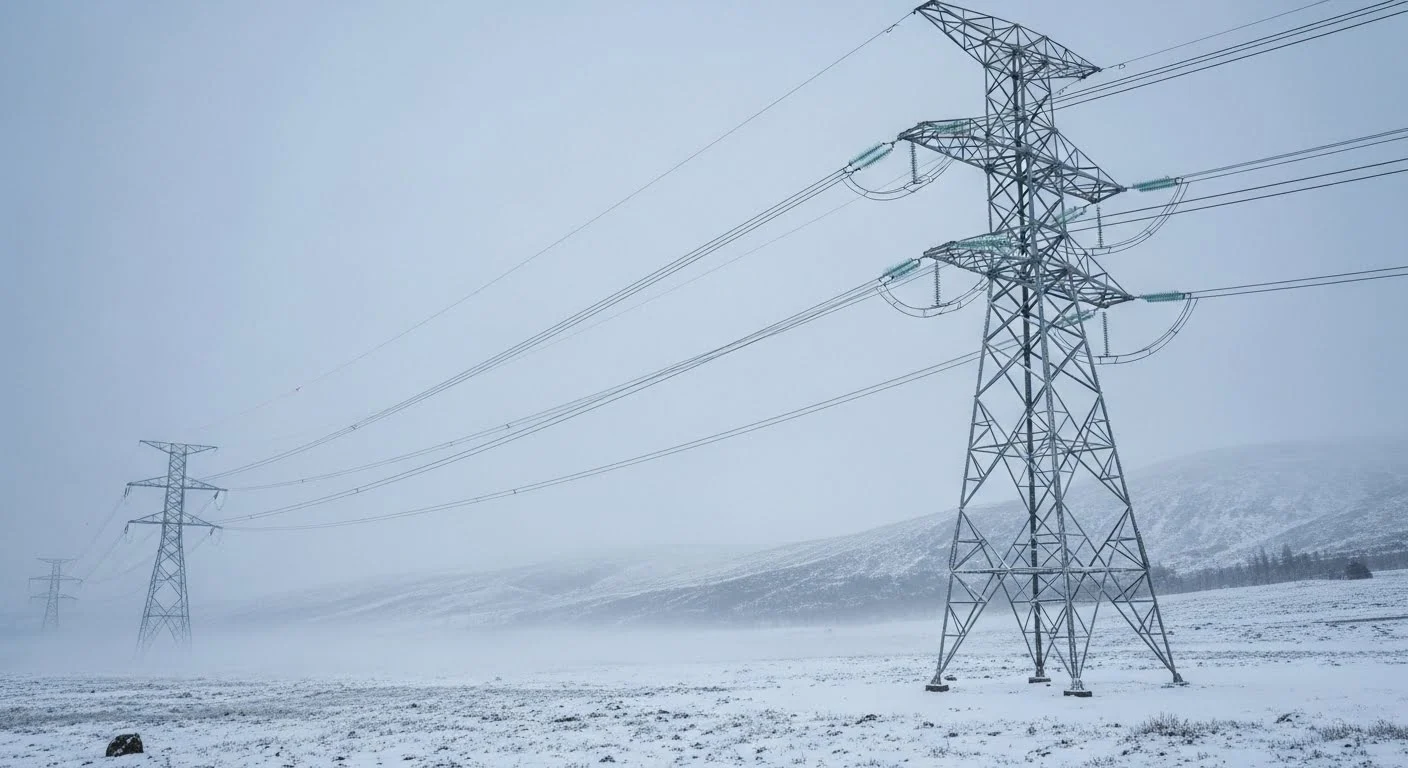
We coat long span solar profiles or high voltage fasteners such as A type poles in one time (single dip) in our 14 meter long galvanized vat. A flawless surface is achieved without the risk of splice marks and warping caused by “double dipping.”
Roll-Form Line and Precision
Holes for the profiles are drilled on the Roll-Form line with millimeter precision. The exact matching of the holes increases the speed of assembly in the field by 30% and reduces labor costs.
Static Project and Load Calculations
Random profile selection cannot be made. For each project, our engineers make the following calculations:
- Wind Load Analysis (CFD):The profile wall thickness is determined according to the wind map of the region.
- Snow Load and Slope:The angle of the panels is optimized to prevent snow from accumulating on them or to carry the load.
- Ramming Tests: “Pull-out“Pull-out” and lateral load tests are carried out in the field to measure how well the piles adhere to the ground. To start assembly without these tests is a gamble.
Soil Investigation and Foundation Type Selection
The same stake cannot be driven into every ground.
- Concrete Foundation: Preferred on rocky and hard ground.
- Pile Piling:The fastest and most economical solution for soil soils.
Subsoil Corrosion (Biggest Risk)
Steel piles entering the ground are exposed to the pH and chemical composition of the soil. Standard galvanizing may not be sufficient in acidic soils. IES Galvaniz applies extra galvanizing thickness or bituminous protection measures for the underground parts according to the results of the ground survey.
Types of Design: Fixed System and Tracker
- Fixed Tilt: Maintenance-free, economical and the most widely used type of steel construction.
- Solar Trackers:Mobile systems that follow the sun. The presence of moving parts requires the construction to be much more rigid (non-flexible) and manufactured with precise tolerances. IES Galvaniz manufactures profiles with special tolerances for tracker systems.
Installation Errors Made in the Field
Points that construction site supervisors and inspection firms should pay the most attention to:
- Prohibition of Drilling in the Field:Drilling when the hole does not fit in the installation destroys the galvanization at that point. Since IES products have full hole precision, this problem does not occur.
- Torquing Standards: Loose bolts will cause vibration and over-tightening will crush the profile. A torque wrench should be used.
- Galvanic Corrosion: At the points where the aluminum panel frame and galvanized steel purlin profile are in direct contact, electron exchange occurs and corrosion starts. Insulation material (EPDM gasket etc.) must be placed in between.
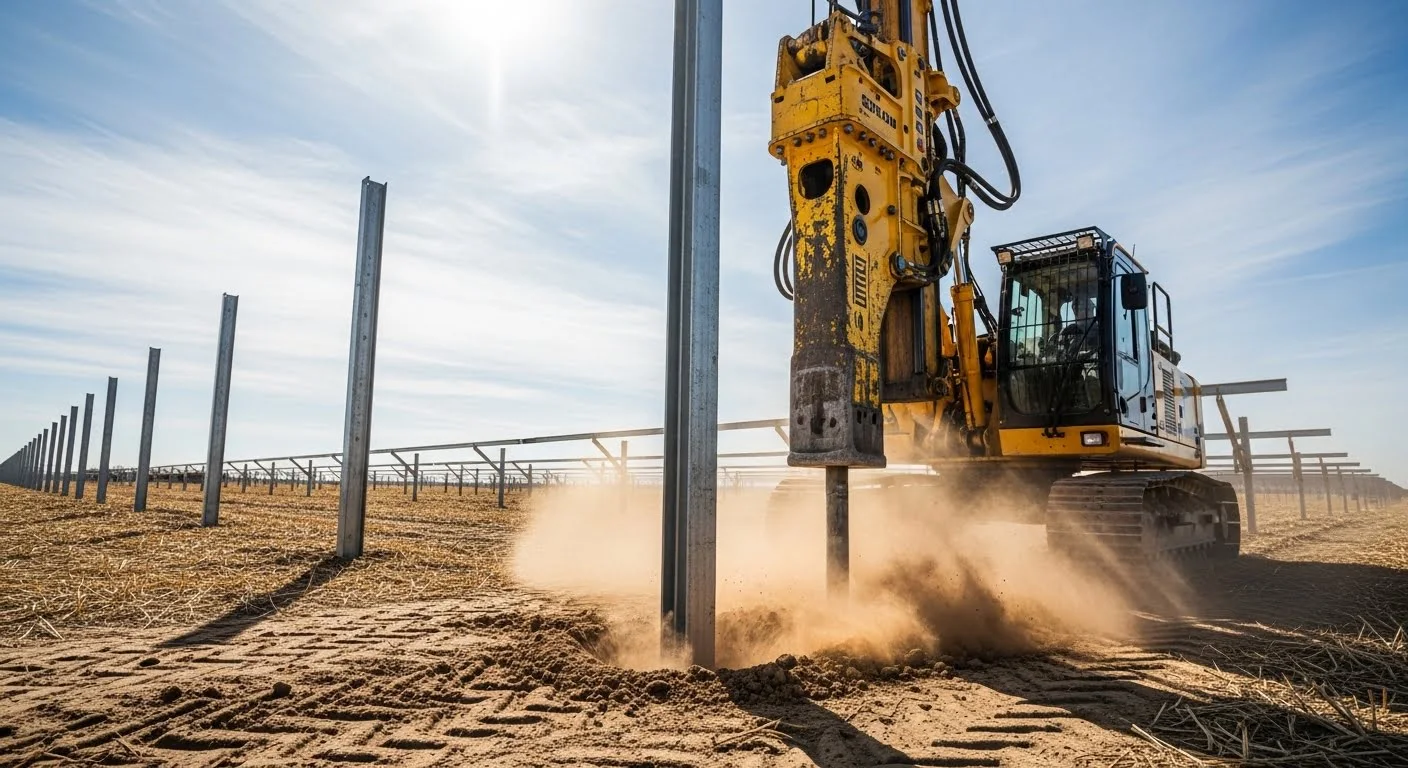
solar carrier system selection guide
Economic Life and LCOE Analysis
Galvanized steel prices, although it may initially seem like a cost item, it is the most profitable investment when looking at the total life of the project (LCOE – Levelized Cost of Energy).
- Initial Investment (Capex) Fallacy:A cheap, thin-fleshed or poorly coated construction requires heavy maintenance or replacement in year 10. This cost far exceeds the initial investment.
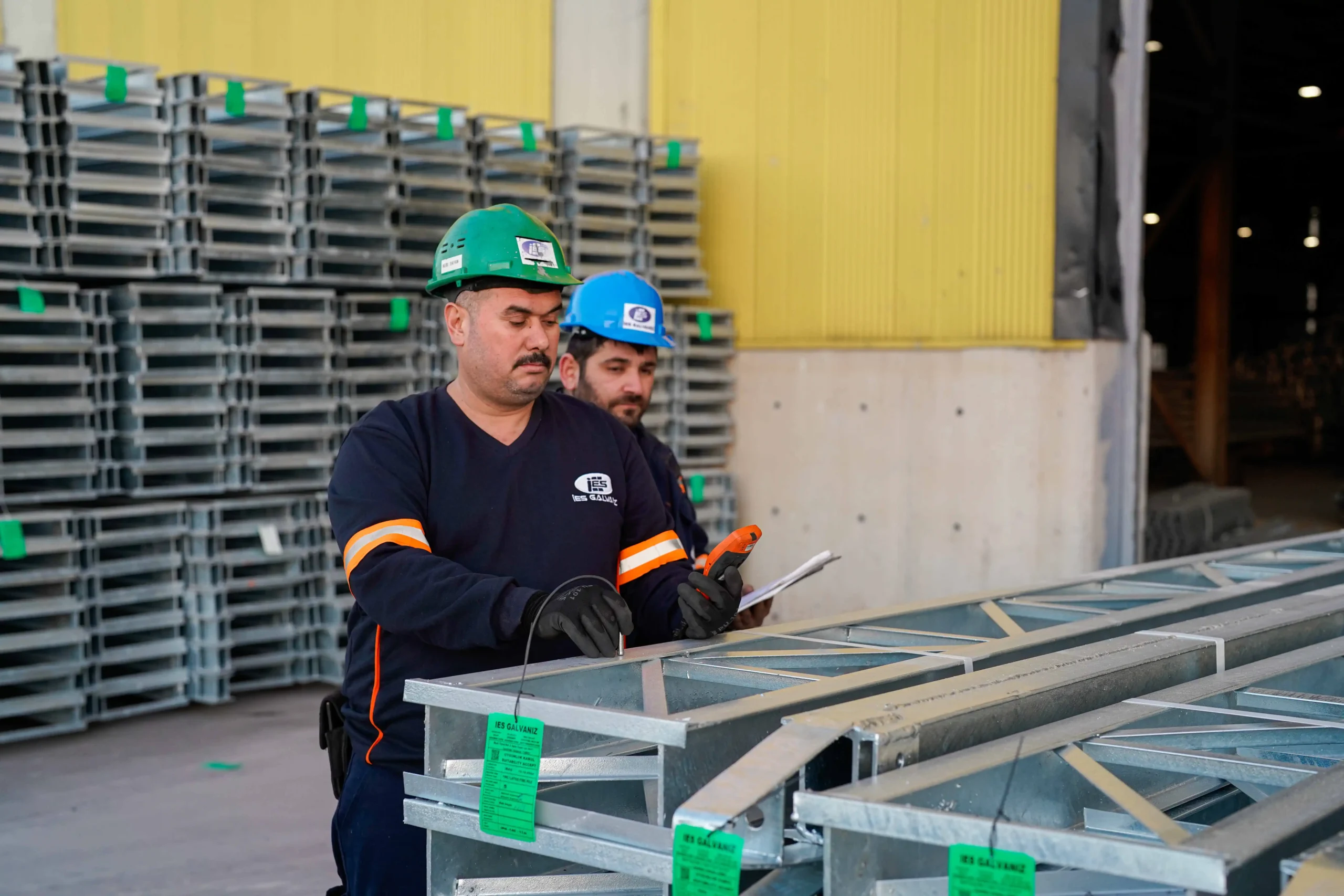
- Maintenance-Free Return: IES Galvanized products do not require painting or maintenance for 25+ years as they are coated according to TS EN ISO 1461 standards. Reduces your operating cost (Opex).
Frequently Asked Questions (FAQ)
- How many years does a SPP construction corrode?
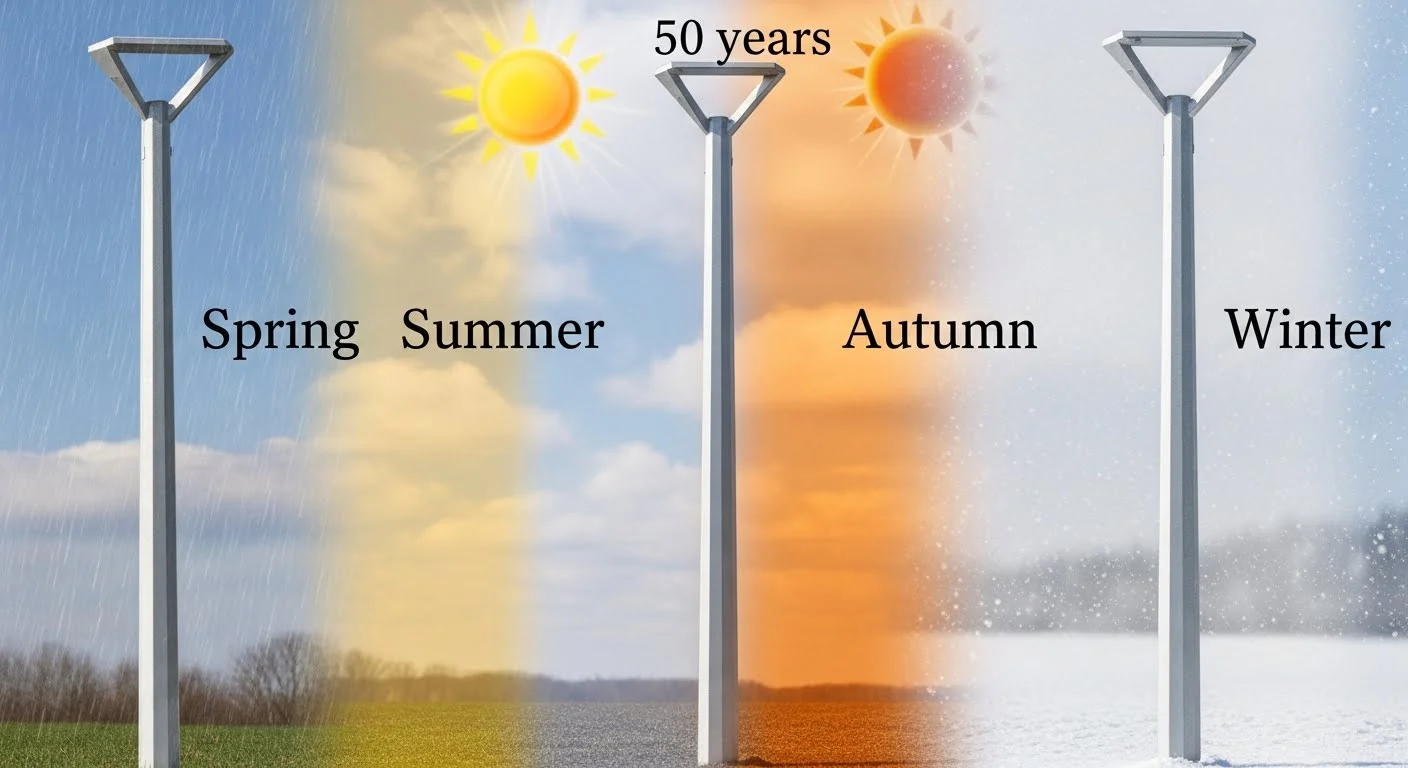
With the correct hot-dip galvanizingapplication (min. 85 microns), rust will not be seen for up to 50 years in a C3 class environment.
- What is the difference between Roof SPP and Land SPP carriers?
Aluminum is generally preferred for lightness in roof systems, while galvanized steelis used for strength and cost advantage in land projects.
- Which steel quality should be used in solar systems?
Usually S235 or S355 quality steel is used where strength is required. IES Galvaniz selects the appropriate raw material according to the static calculation of the project.
Carry the Sun Right
Get energy from the sun and power from steel. The success of a SPP project depends not only on the efficiency of the panels, but also on the lifetime of the system that carries them.
İES Galvaniz offers end-to-end steel solutions from ground investigation to static calculation, from A type pole production to solar mounting systems. With our 14 meter single immersion technology and an annual production capacity of 120.000 tons, we are confidently carrying your SPP investments to 25 years and beyond.