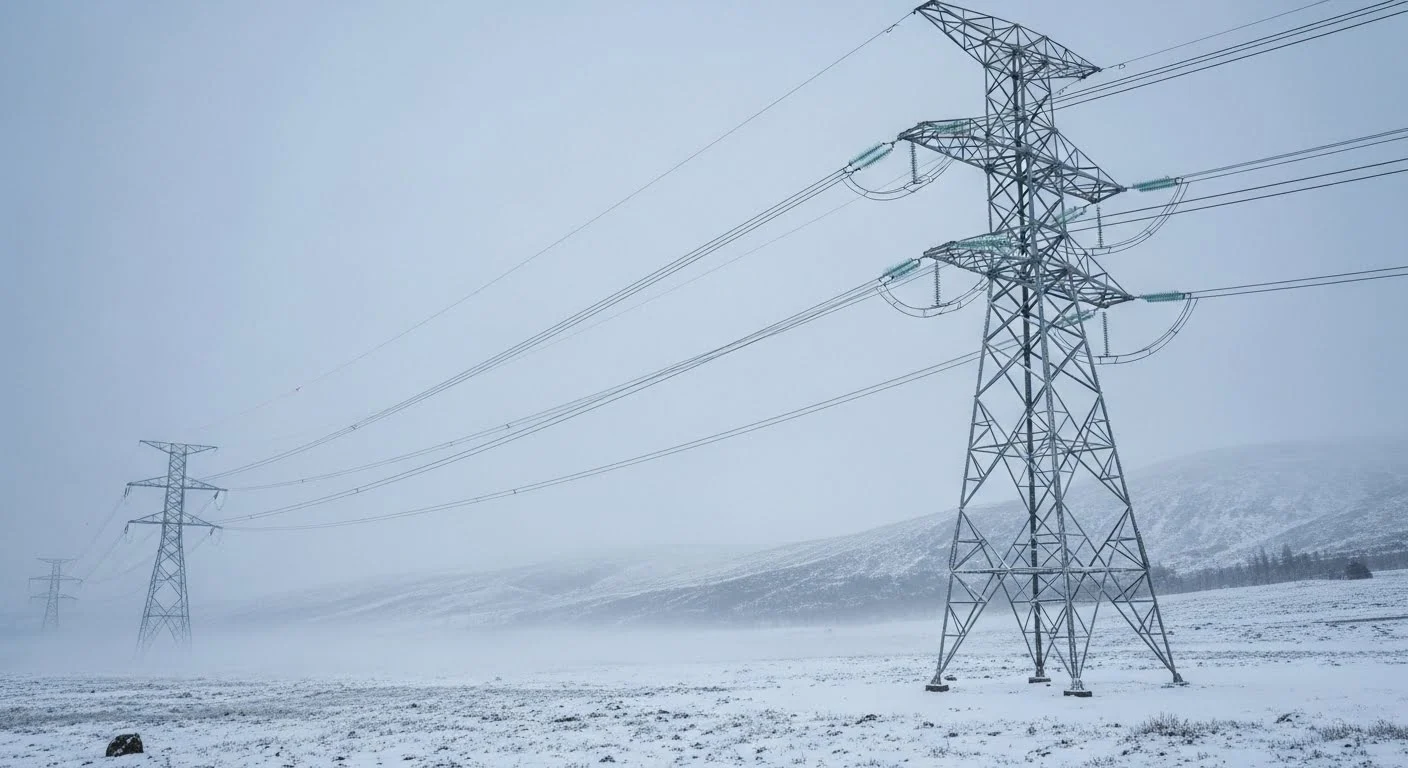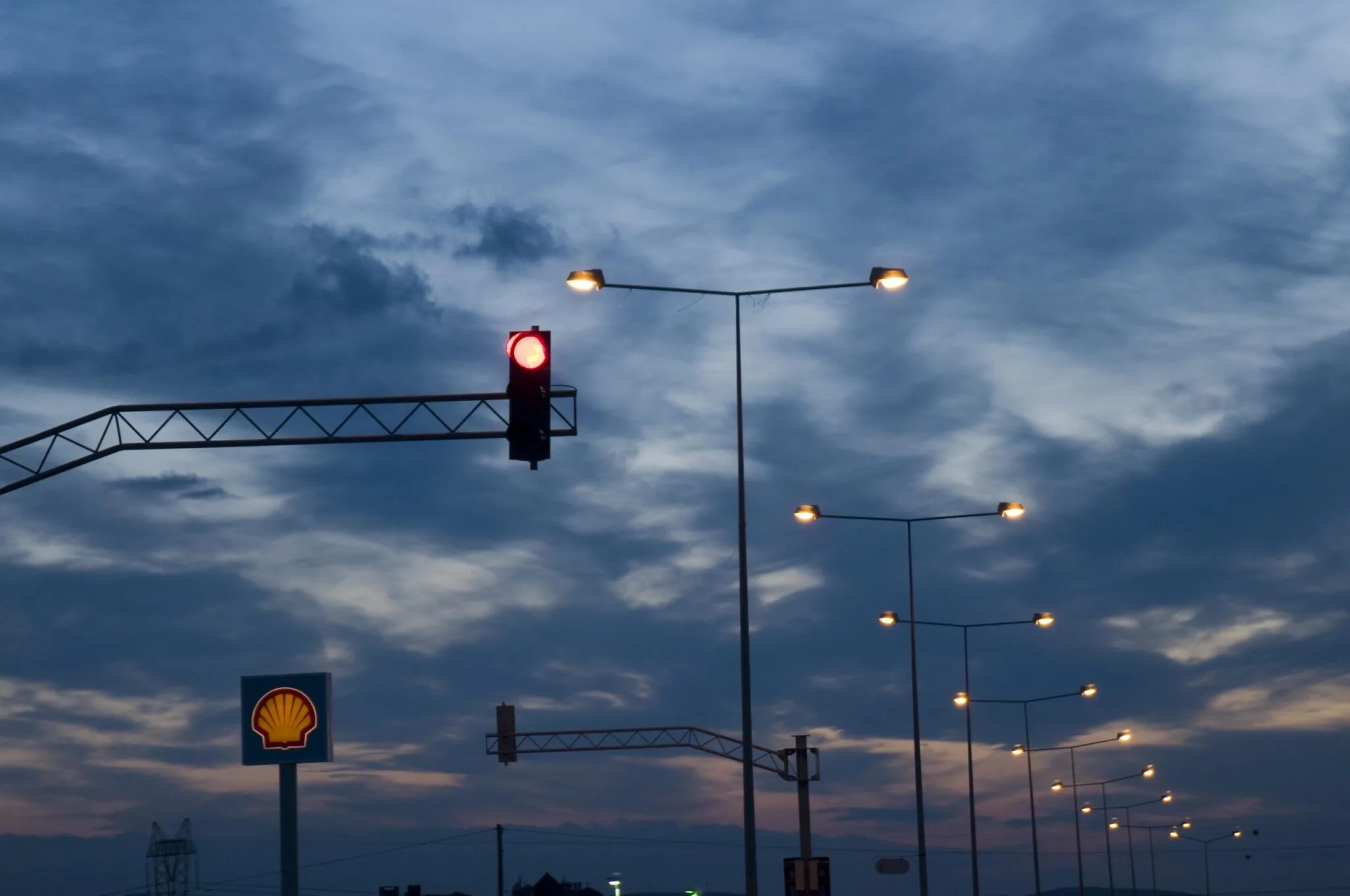


Modern life depends on an uninterrupted supply of energy. When a factory stops, a hospital is without power or a city is plunged into darkness, it is not only an economic loss but also a strategic security issue. Energy transmission lines (ENH) are our “veins” that carry electricity from the power plant to the consumer. But these vessels have an insidious enemy: Corrosion.
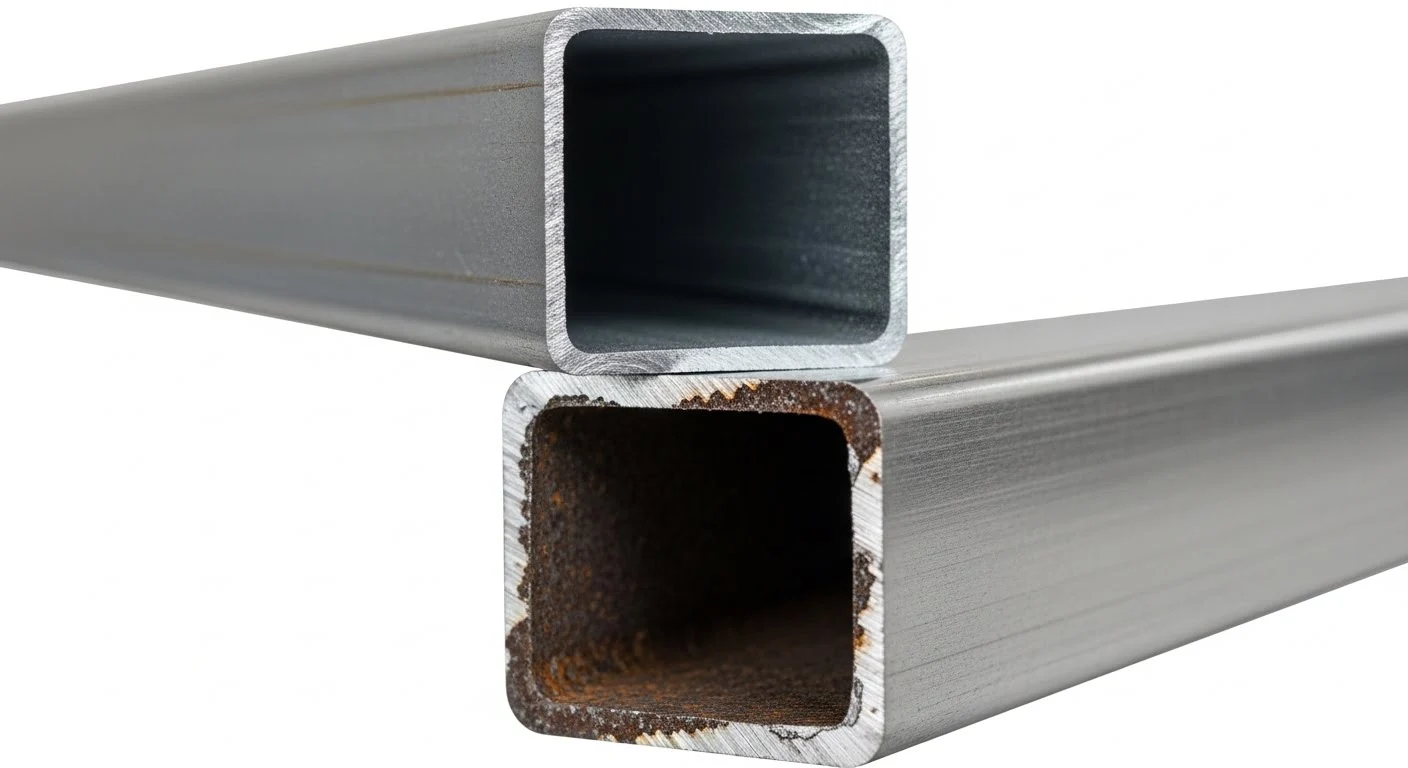
While wind, snow or ice loading are often the apparent cause of downed lines, the real culprit is often corrosion (rusting), which over the years eats away at the metal, weakening its cross-section and making the pole prone to toppling over in the slightest storm.
1. What is the Threat of Corrosion in Energy Transmission Lines (ENH)?
Power transmission lines are outdoor structures exposed to nature’s harshest conditions (mountain peaks, humid valleys, salty coastlines). Unprotected steel reacts with oxygen and moisture in the atmosphere and turns into iron oxide (rust).
Regional Risk Analysis
The rate of corrosion is not the same everywhere. IES Galvaniz engineers take into account the geographical location of the project in the pole design
- Marine Environment:Salt water vapor (Chloride ions) from the sea accelerates electrochemical corrosion. The lifespan of a painted pole in these regions does not exceed 3-5 years.
- Industrial Areas:Sulfur Dioxide (SO2) and other acidic gases from factory chimneys create an acid rain effect on the metal surface, causing very rapid mass loss.
Consequences of Corrosion: Domino Effect
Corrosion of a pole does not only concern that pole. A rusting mast leg weakens and loses its bearing capacity (moment of strength). When this pole is toppled in the first storm, the conductor wires are stretched and the domino effecttakes down the sturdy poles further down the line. The result: Kilometers of lines collapsed and power outages lasted for days.
2. What is a Type A (Lattice) Mast? Structural Features
The most widely used poles in Low Voltage (LV) and Medium Voltage (MV) distribution networks in Turkey are called “A Type Pole” or “Iron Pole“, which are usually formed by combining angle (L iron) profiles.
Why Type “A”
As the name suggests, it looks like the letter “A” when viewed in side profile. It is wide at the base and tapers towards the top. This pyramidal geometry increases the resistance of the pole to the overturning moment and spreads the load evenly over the ground (foundation).
Partial Construction and Assembly
A type poles consist of main uprights, crosses (braids) and sleepers. At the IES Galvanizing plant, these parts are produced as welded (usually lower body) or bolted (upper body and cross members) according to the project.
3. Advantages of Type A Poles over Concrete and Wood Poles
Why project owners should choose galvanized steel poles instead of concrete?
A. Lightness and Logistics (Mountainous Terrain Advantage)
A power line often passes through steep terrain with no roads. A 10-12 meter concrete pole weighs tons and is very difficult, sometimes impossible, to transport and erect with a crane.
- Steel Advantage: Type A steel poles are much lighter than concrete. It can be transported in parts (disassembled) on mule back or by small vehicles even to the steepest peaks and assembled on site.
B. Flexibility and Earthquake Resistance
Concrete is a brittle material; it does not stretch, it breaks. Steel is a “ductile” material.
- Steel Advantage: In sudden loads such as earthquakes, storms or conductor breaks, type A poles flex and absorb energy. It does not suddenly break like a concrete pole and bring the line down.
C. Recycling and the Environment
A concrete pole that has reached the end of its life or has been damaged remains as “rubble” in nature.
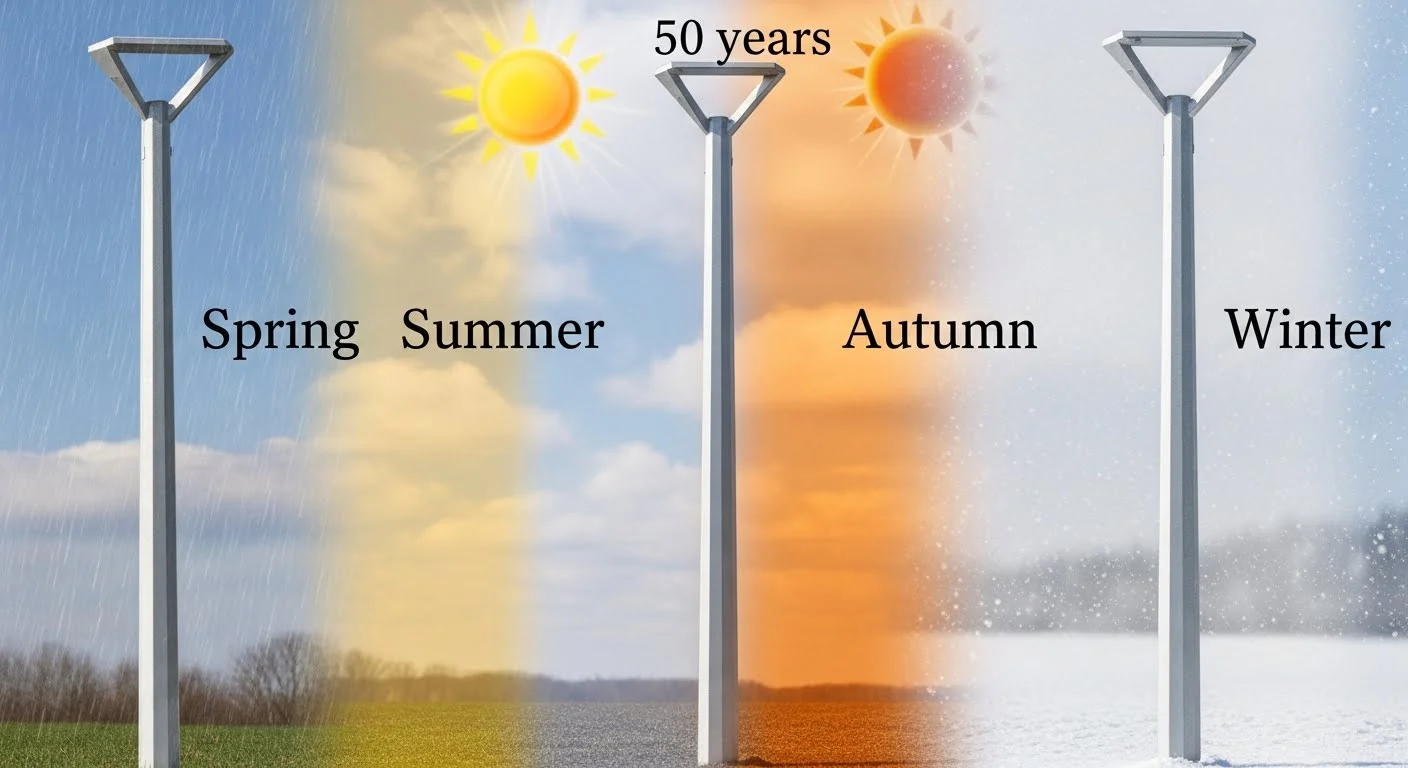
- Steel Advantage:Galvanized steel poles are 100% recyclable, even after their 50-year lifespan, and are returned to the economy at scrap value.
4. Types and Tasks of Type A Poles
Every pole in a power line does not perform the same task. According to their static calculations, they are divided into 3 main categories:
Carrier Poles
Used where the line runs in a straight line. Their task is to carry only the weight of the conductor (wire) and the wind load. They do not carry the tensile load of the line. They are the lightest and most economical poles.
Stop Posts
The poles on which the line is stretched and fixed at regular intervals. They act as “fuses” that prevent the rest of the line from collapsing if the conductor breaks. Their structures are stronger than carriers.
Final (Last) and Corner (Zaviye) Poles
- End:The poles where the line starts or ends (transformer building, etc.). They withstand unilateral tensile force.
- Corner (Zaviye): Used at points where the line changes direction (turns left/right). They are designed to resist the compound forces depending on the corner angle (e.g. 30°, 60°, 90°).
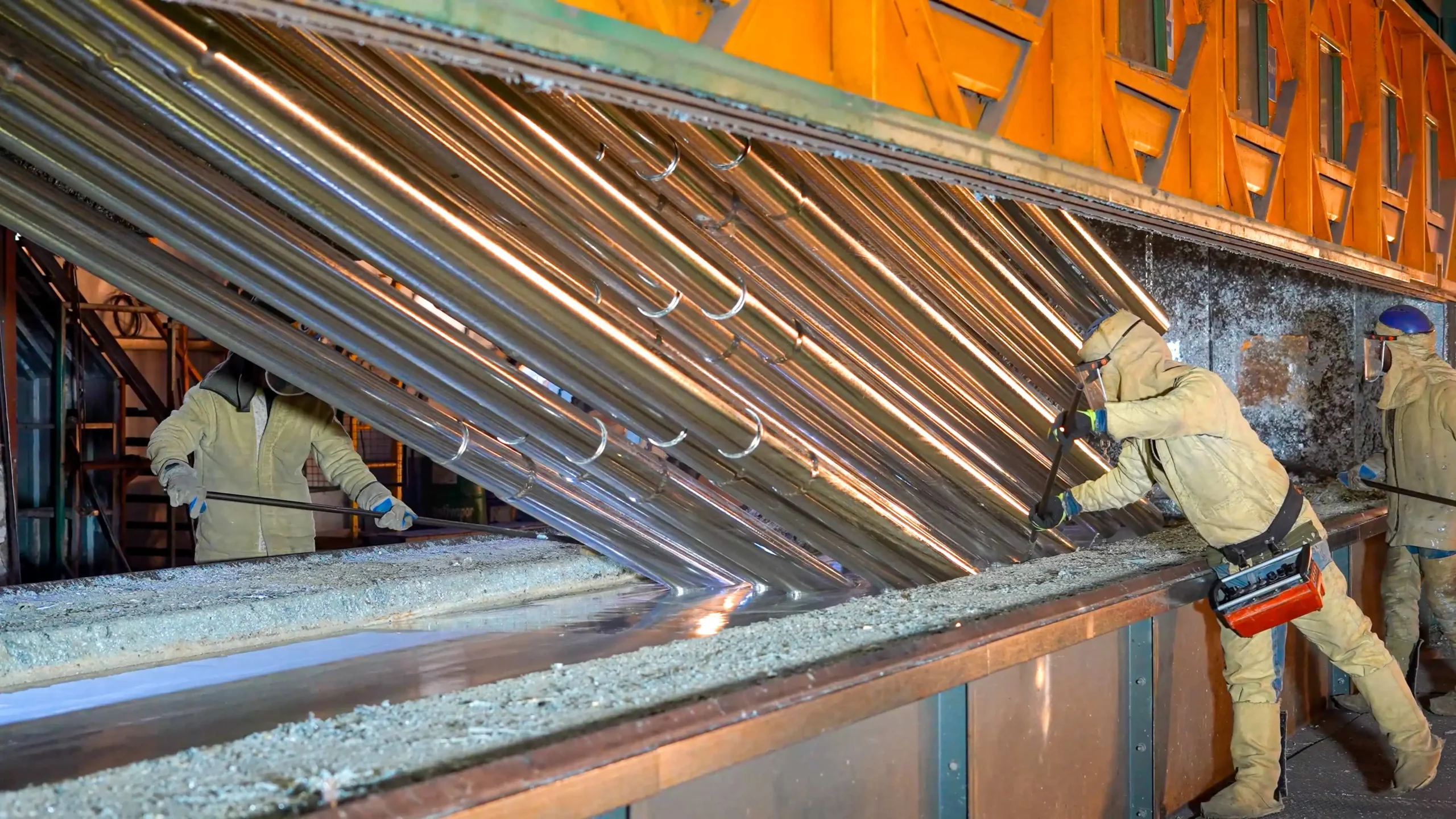
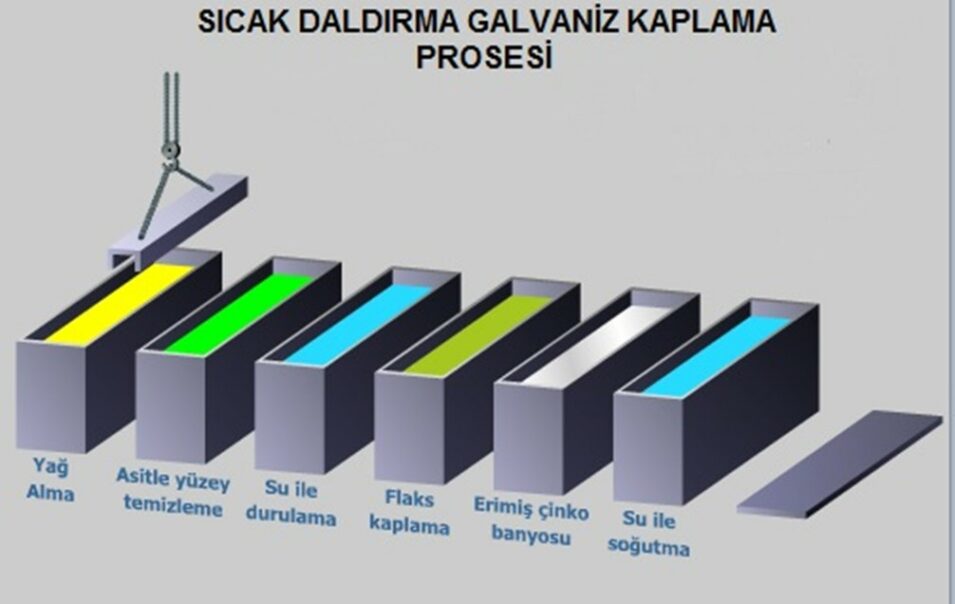
Hot Dip Galvanizing
5. The Definitive Solution Against Corrosion: Hot Dip Galvanization
Once power lines are commissioned (“energized”), it is very costly and difficult to de-energize them for maintenance. It is operationally almost impossible to climb to the top of a pole and paint it. For this reason, power poles should be “Maintenance-Free”structured.
The only technology that enables this is Hot Dip Galvanizing.
TS EN ISO 1461 Standards
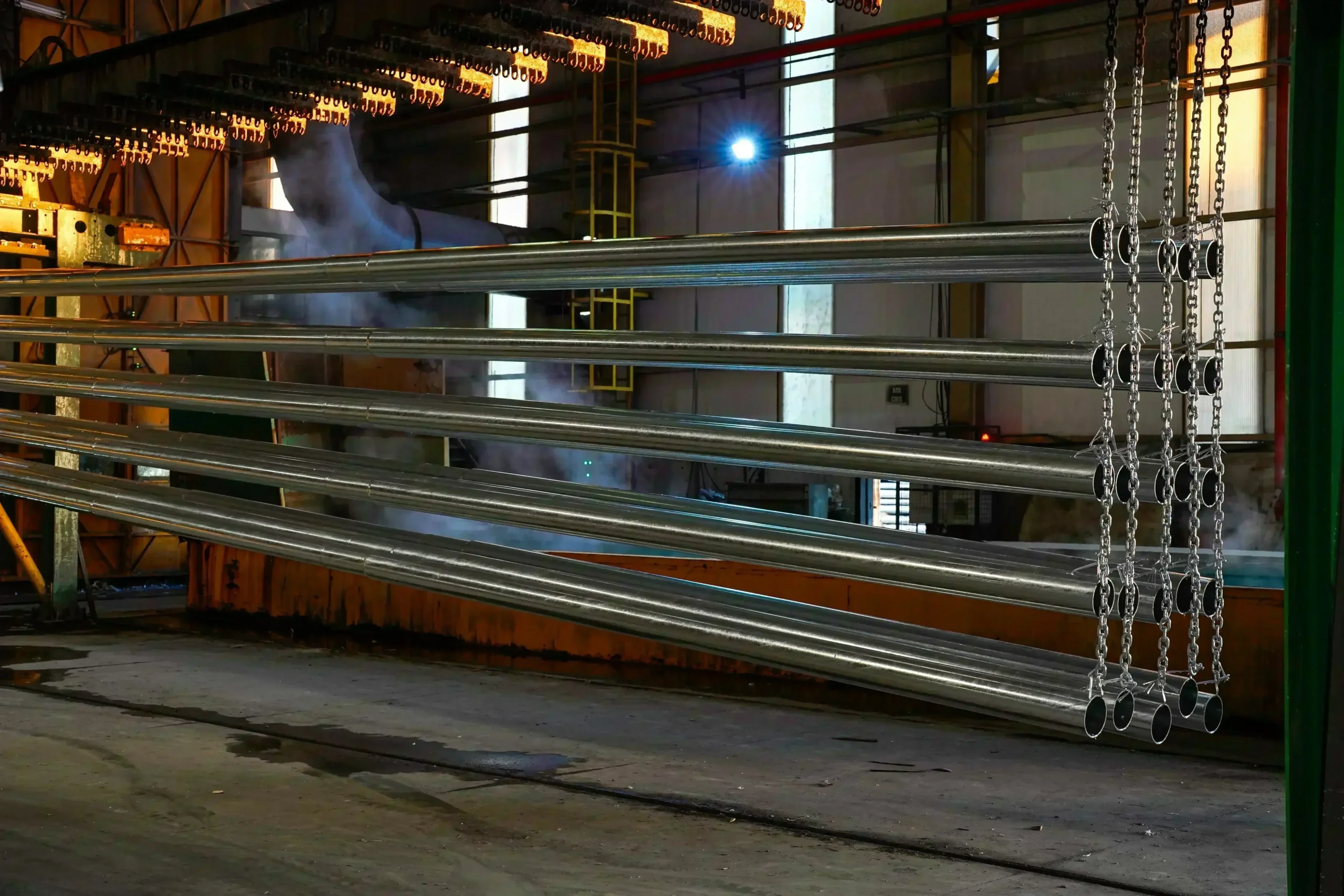
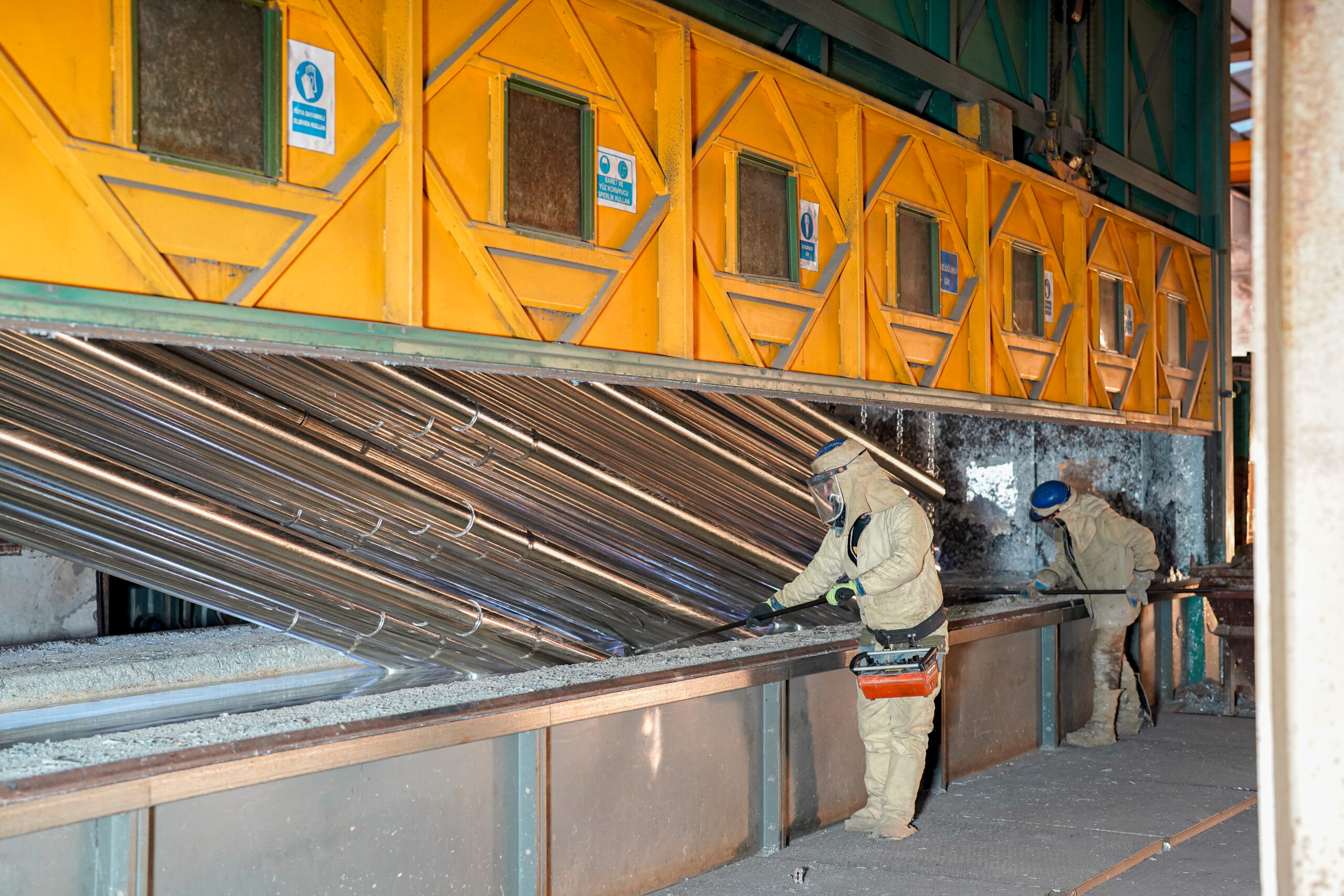
A type polesproduced at IES Galvanizing facilities are dipped in a liquid zinc pool at 450°C after welding and drilling operations are completed.
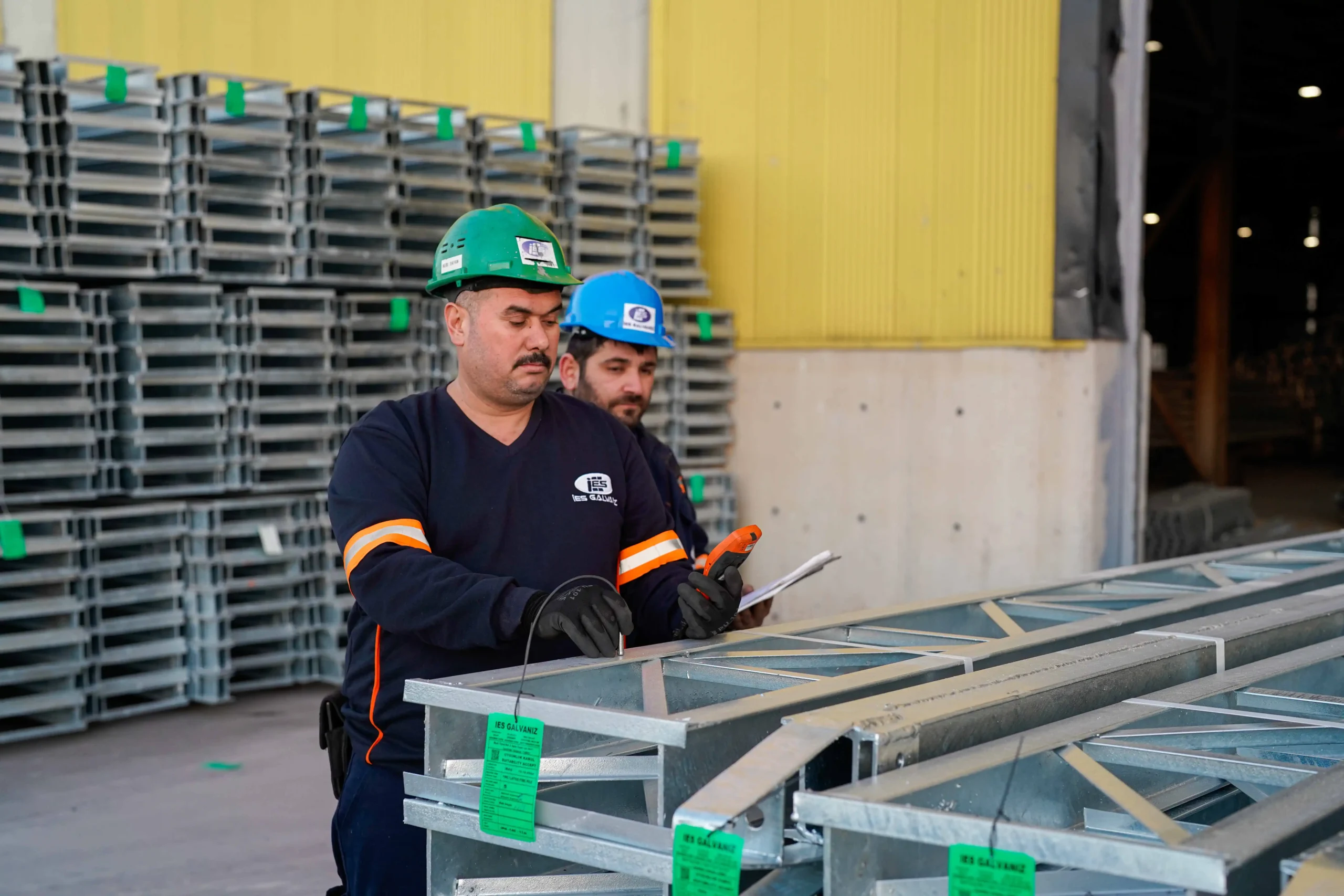
- Coating Thickness:The average coating thickness specified in the standards for energy poles (usually 85 microns and above) is guaranteed. This thickness ensures that the pole will not rust for at least 40-50 years.
Subsoil Corrosion (Critical Point)
The weakest point of the pole is the “ground transition” zone, where it enters the soil and comes into contact with the concrete. Moisture and soil acids attack the metal here. Painted poles often rot from the bottom and fall over. Hot-dip galvanizing ensures complete protection even on the stubs, which remain below ground.
6th IES Galvanizing Production Technology: Welded and Bolted Manufacturing
Quality is in the details. The manufacture of type A polesis not a simple blacksmithing job; it requires engineering and standards.
Welded Fabrication
The lower bodies and joints of the poles are usually welded. Welds are made by gas or submerged arc welding methods by certified personnel. Welding slags are cleaned before galvanizing to ensure homogeneous coating.
Bolted (Disassembled) Systems
Especially in export projects or in very steep terrains, it is preferred to produce the poles completely bolted (disassembled). Thanks to the precision of the holes drilled in our CNC machines, there is no problem of “the hole did not match” when assembling on the top of the mountain.
14 Meter Galvanized Pool Advantage
Thanks to the 14-meter long galvanizing boiler of IES Galvaniz, long pole parts can be coated at once (single dip). The risks of splice marks or warping that occur on double-dipped poles are eliminated.
7. Energy Transmission Line Design and Pole Selection
To choose the right pole, engineers need to calculate the following parameters
Ice Load Zones
The geography of Turkey is divided into I., II., III., IV. and V. ice load regions according to climatic conditions.
- Example:A pole in Antalya (Zone I) and a pole in Erzurum Palandöken (Zone V) must have completely different strength characteristics due to the weight of ice that will accumulate on them. Wrong site selection means line collapse in winter.
Wind Clearance (Range)
The distance between two poles is called “range”. As the range increases, the weight of the wires and the force applied to the wires by the wind increases. IES Galvaniz manufactures poles with peak strengths suitable for the range values in your project (e.g. 50m, 80m, 100m).
Conductor (Wire) Selection
The type of wire to be used (Rose, Swallow, Pigeon, Hawk, etc.) and its cross-section directly affect the load on the pole.
- Swallow (AWG 3):Commonly used in village networks.
- Pigeon (3/0 AWG):The standard for medium voltage lines.
8. Maintenance, Inspection and Life Analysis
Galvanized Type A poles are the closest solution to the “set it and forget it” principle, but simple checks during operation will extend their life even further.
- Visual Inspection: Over time, galvanizing loses its shiny gray color and becomes dull (Patina). This is normal and indicates that the protection is working. However, if there is rust in places that have been physically impacted, it should be repaired with “cold galvanizing”.
- Earthing Control: The earthing resistance of the pole should be measured periodically. A good earthing provides both life safety and prevents corrosion caused by leakage currents.
- Economic Lifespan:The lifespan of a galvanized steel pole can exceed 50 years. Considering that concrete poles crack and rust in 15-20 years, steel poles have the highest Return on Investment (ROI).
9. Frequently Asked Questions (FAQ)
- A type poleis the same as cage pole?
Yes, A type polesare a subtype of lattice poles. Generally used in distribution lines (up to 36 kV). At higher voltages (154 kV, 380 kV) larger cage poles (pylon) are used.
- Why do energy poles have to be galvanized?
Because TEDAŞ and international standards require it. Paint is not a sustainable protection method for difficult and risky structures such as power lines.
- Can old rusty poles be galvanized in place?
No. Hot dip galvanizing can only be done in the factory. However, rusty poles in the field can be cleaned and protected with special paints, but this is a temporary solution. It is best to use galvanized poles from the beginning.
- Which pole is used for 3/0 (Pigeon) conductor?
This depends on the ice load zone and the distance between the poles (range). For example, in the II. ice load zone, for 3/0 conductor, usually 10 or 12 meter tall poles such as T-10, T-12 or equivalent type A iron poles are selected.
Energy Security Cannot Be Left to Chance
The development of a country depends on the uninterrupted flow of energy. Every pole toppled due to corrosion means loss of production in industry and victimization in homes.
İES Galvaniz ensures that your power lines survive for 50 years with A Type poles fully compliant with TEDAŞ specifications, certified for welding quality and galvanized in one piece in 14-meter pools.